Description
Highlights of the Kidde SM120X Interconnect Accessories Smoke Relay Module
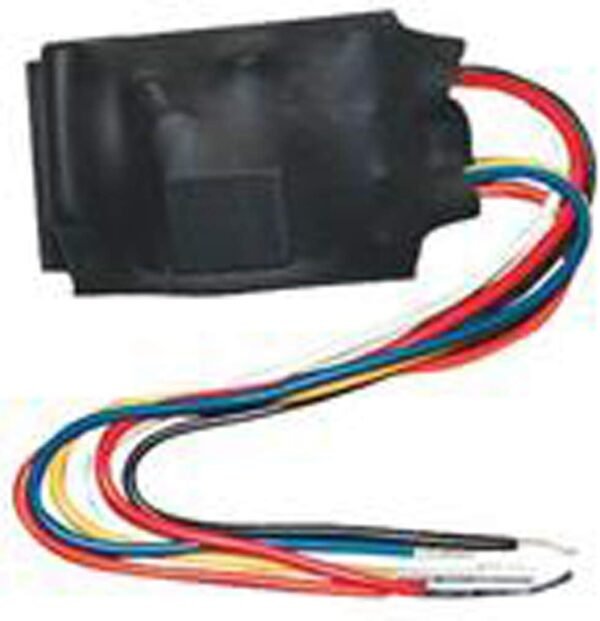
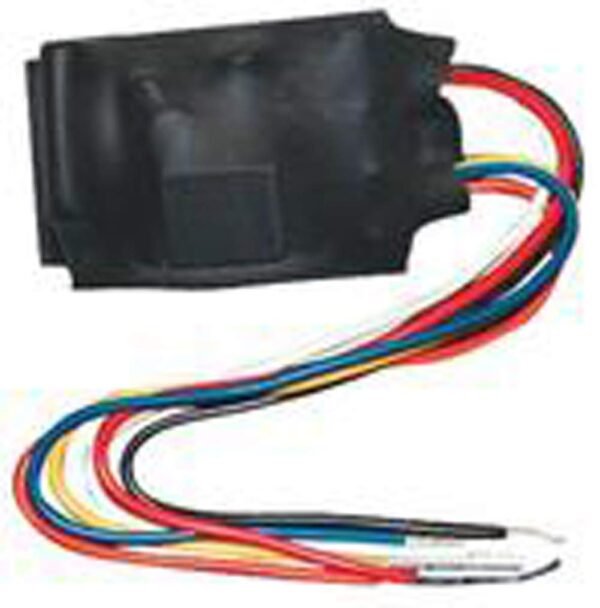
The Kidde SM120X Interconnect Accessories Smoke Relay Module is not an alarm. It is the component that lets an interconnected alarm loop do something other than sound its own horns. Published behavior is straightforward: the module switches power to a connected device as soon as a smoke or heat interconnect signal arrives on the loop, so auxiliary equipment such as a strobe, a bell or an exhaust shutdown can be driven from an alarm event. It carries an internal power supply and is specified as compatible with manual pull stations, flow switches and spot type heat detectors, which widens the range of inputs a residential loop can accept. Compatibility is stated for Kidde fyrnetics multiple station alarms and detectors, which is the same family that covers most of the wired units in the smoke detector and fire alarm category.
Wiring is handled by 10 inch, 18 gauge pigtail leads, which land in a junction box or panel without an adapter. A test and reset button is built into the module so the loop can be verified without disconnecting power.
Downsides That Might Affect Some Users
The main constraint is stated in the listing itself: compatibility is centered on Kidde fyrnetics devices. A property with mixed brand alarms on one loop is outside what the module is specified for, and mixing interconnect protocols across manufacturers is not something to work out by trial. Power is a 120 VAC, 60 Hz supply drawing 0.08 amps, so the module has to be fed from a suitable circuit and is not a low voltage device.
There is also no battery and no backup supply in this product. When mains power drops, the relay function drops with it, even though the battery backed alarms on the loop keep sounding. Any installation that needs the auxiliary output to survive an outage has to add a backup supply separately. Installation itself involves handling 18 gauge conductors and landing them correctly, which puts it firmly in the category of work a licensed electrician should do where local code requires it.
Design and Build Quality
Two published figures do not reconcile and should be checked before ordering. The module is described as weighing about 1.6 ounces, which is consistent with a small potted relay assembly, while the dimensions on the same listing read 7 by 14 by 7 inches, which is not a size that weighs an ounce and a half. The second figure is almost certainly shipping carton dimensions rather than the device itself, but the listing does not say so; confirm the actual body size against the manufacturer sheet before planning an enclosure around it.
Beyond that, the design is deliberately plain. It is a wired module rather than a wireless one, which for fire signaling removes a whole class of pairing and interference questions. The test and reset button on the body is the only user control. The pigtail leads are 10 inches, which is short for a run of any length, so a complex layout will need the leads extended in an approved manner and the routing planned before the module is mounted.
How the Relay Behaves in a Wired Loop
The published function is a single action repeated reliably: an interconnect signal arrives from a smoke or heat device and the relay switches power to whatever is connected to its output. Because the module also accepts manual pull stations and flow switches as inputs, one loop can carry both automatic detection and manual initiation, which is how a small commercial or large residential arrangement is usually laid out. On the detection side that loop typically includes hardwired heads such as the Kidde i12010S hardwired alarm with 10 year backup, or the fixed temperature Kidde HD135F heat detector in spaces where particle sensing causes nuisance alarms.
The module is UL approved, which means it has been evaluated for its class. It does not mean a given installation is compliant. What auxiliary devices may be driven from an alarm loop, and how, is set by local code and by the design of the system as a whole, not by the capability of one relay.
Value Proposition
Priced against what it does, the SM120X is reasonable for a property already built around Kidde interconnected devices. It is a single purpose part, and the value sits in not having to redesign a working loop to add an auxiliary output. Buyers running mixed brand hardware or wanting wireless interconnect will find the compatibility limit decisive rather than inconvenient.
The absence of onboard backup power should be costed in from the start. If the auxiliary output has to function during an outage, the budget includes a backup supply as well as the module, and that addition is often larger than the price of the relay itself.
Other Options in the Market
The nearest comparison in a commercial addressable system is a monitor module such as the Notifier FMM-1 monitor module, which does related work on a very different class of panel and is specified for professionally engineered systems. Within residential and light commercial wiring, competing modules from other makers offer broader brand compatibility or wireless interconnect, which simplifies installation while introducing the usual questions about radio reliability in a life safety path.
The SM120X trades that breadth for a wired connection and a defined compatibility list. Where a property already runs Kidde alarms, that trade is the point. Where the alarm heads are mixed, or where a system is being designed from scratch, the module choice should follow the system design rather than lead it.
Positive Features That Stand Out
- Switches connected device power on receipt of a smoke or heat interconnect signal
- Internal power supply, with manual pull stations and flow switches as supported inputs
- Specified for Kidde fyrnetics multiple station alarms and detectors
- 10 inch, 18 gauge pigtail leads and an onboard test and reset button
- UL approved for its class
Limitations to Keep in Mind
- Compatibility centered on Kidde fyrnetics devices
- Requires a 120 VAC supply, with no battery backup included
- Wiring work that local code may require a licensed electrician to perform
- Pigtail leads too short for anything but a close mount
- Listed weight and listed dimensions do not agree
As a component the SM120X is narrow and well defined: it takes an interconnect signal and switches an output. Deciding what should be on that output, and whether the resulting arrangement satisfies the fire code that applies to the building, is a design question for a qualified installer rather than a specification comparison. Hardwired heads such as the Kidde i4618 hardwired smoke alarm supply the signal; this module decides what happens next with it.