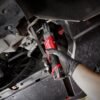

Description
Design and Build Quality
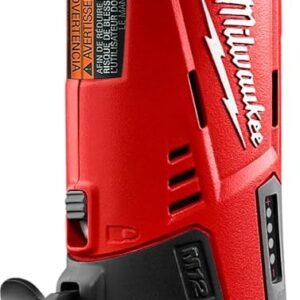
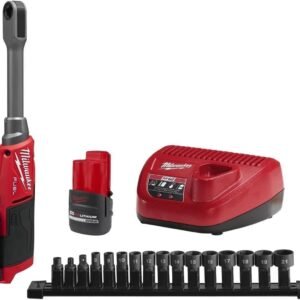
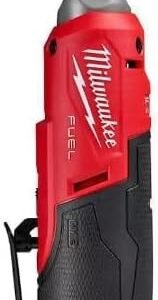
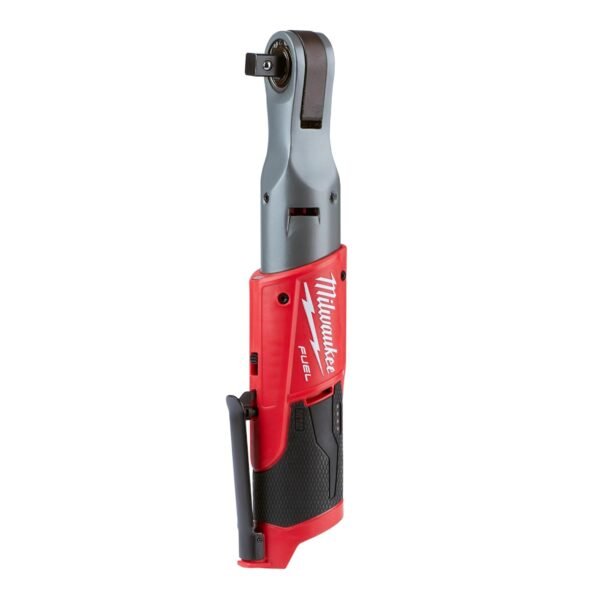
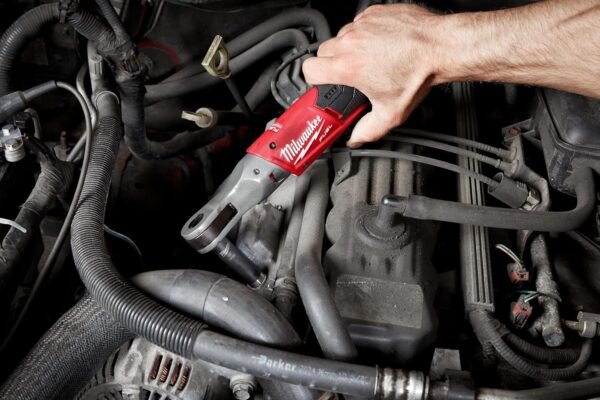
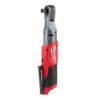
The Milwaukee Electric Tools 2558-20 Fuel Ratchet M12 Fuel 1/2″ Ratchet (Tool Only) is specified as a compact and lightweight design, listed at just over 11.5 inches long. The listing weight is where the data breaks down: it gives 4.8 ounces for a tool described in the same breath as alloy steel construction with a brushed finish and rated to 60 foot-pounds. Those figures cannot all be right, and 4.8 ounces looks like a units or packaging-field error rather than the real mass of an alloy steel half-inch drive ratchet. Confirm the shipping weight against Milwaukee’s own spec sheet before buying on that number. The open-end head style is the meaningful build detail for tight-space work, and the alloy body is what the torque rating rests on.
Performance and Power
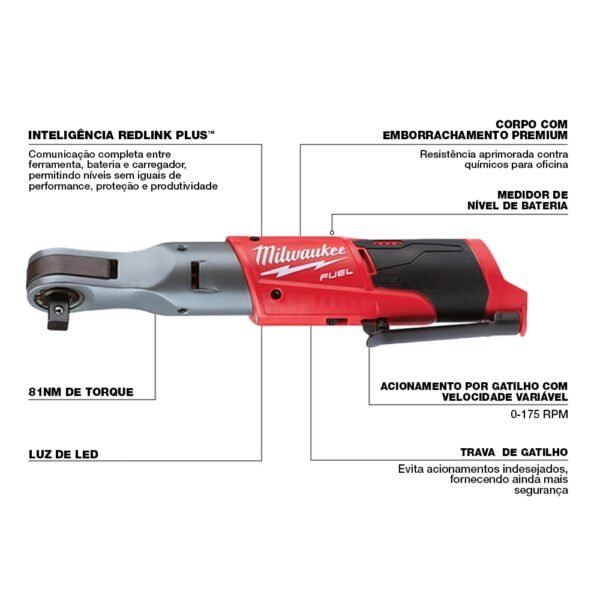
As a battery-powered ratchet, the 2558-20 covers a wide slice of mechanical work on paper. It is rated at 60 foot-pounds of torque and 175 RPM, a combination that trades run-down speed for the pulling power to break and set fasteners without rounding them. The cordless operation is the main practical gain in cramped positions where a hose or cord becomes the limiting factor. It runs on M12 lithium-ion batteries, not supplied with the tool, and the M12 pack range is the reason this platform keeps showing up in busy workshops and home garages.
Ease of Use and Features
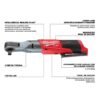
The feature list is deliberately short. Balance is set by the inline body shape, and the grip is sized for extended sessions rather than maximum torque leverage. The controls come down to a forward and reverse switch that detents into position, which is the fastest arrangement for direction changes with one hand. The precise ratcheting mechanism is what delivers consistent feedback without slipping under load. There is no speed dial and no electronic mode selection here, which keeps the tool simple for professionals and DIYers who want the function and nothing else.
Benefits
- Compact and lightweight for easy handling and maneuverability.
- Solid torque output suitable for automotive and home projects.
- Cordless design enhances portability and usability in tight spaces.
The handling and durable build are the strongest points on the spec sheet, and battery-powered operation is the line that separates it from a manual ratchet at similar torque.
Drawbacks
- The ratchet does not come with a battery or charger, so additional investment is necessary.
- At 175 RPM, it might feel a bit slow for some high-volume tasks.
- The tool’s basic features mean it lacks adjustable speed settings or advanced controls.
The gaps are real: this is not the fastest ratchet in the category, and the missing battery in the box is a genuine cost for anyone not already on M12. Buyers chasing free speed usually cross-shop the Milwaukee 2568-20 cordless ratchet before deciding.
Alternative Products
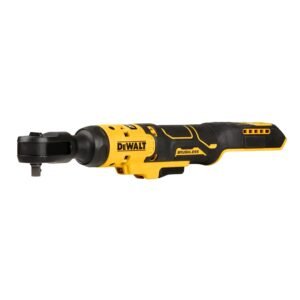
Cross-shopping in this category normally means DeWalt and Makita cordless ratchets. DeWalt’s 20V models generally arrive as kits with battery and charger included, which is the better starting point for anyone with no platform yet, at the cost of a bulkier body in tight spots. The DEWALT 20V MAX brushless cordless ratchet is the closest direct comparison on torque. Within Milwaukee’s own range, the M12 3/8 inch subcompact ratchet is the smaller sibling for engine bay work. The 2558-20 sits between them on torque, portability, and durability, and its five-year warranty is longer than several competitors offer.
Price Performance
As a spend, this ratchet reads as a long-horizon purchase rather than a bargain buy. The five-year warranty carries most of that argument, since it is Milwaukee’s own statement about expected service life. Batteries are a separate line item, but the durability and torque rating are what the price is actually buying. For an existing M12 owner the tool-only price is the entire cost, which is where the value case is strongest. Against similar models it holds competitive torque in a compact body, which suits professionals and hobbyists who need a dependable cordless ratchet without moving up to a full impact wrench.
Versatility and Practical Use
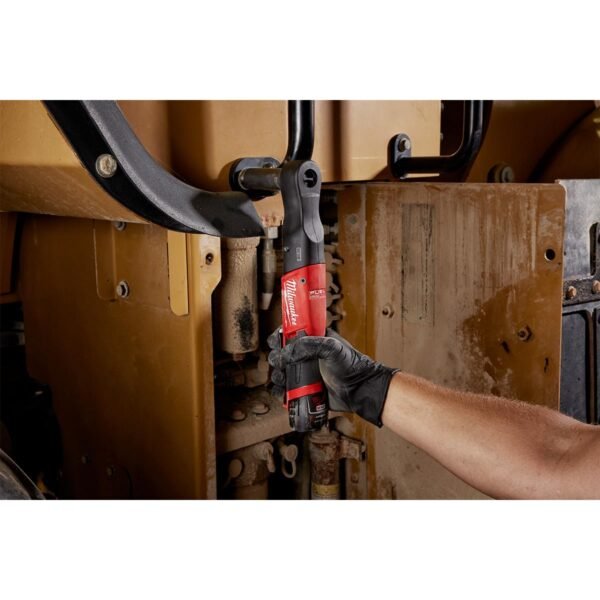
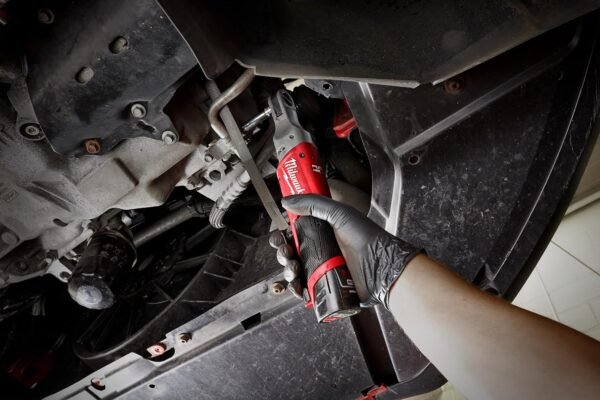
The specification suits automotive repair, furniture assembly, and light industrial fastening equally well, because 60 foot-pounds covers the fastener sizes common to all three. The open-end head design is what allows the tool to be slid onto nuts at awkward angles instead of dropped straight down on them, which is the difference that decides whether a fastener is reachable at all. The cordless feature removes the hose and extension cord from that equation entirely. For quarter-inch work at lower torque, the M12 1/4 inch ratchet covers the smaller end of the same jobs.
Battery Considerations and Maintenance
The tool requires an M12 lithium-ion battery, which is not included, so budget the pack and charger separately unless the shop already runs other M12 tools. Where that platform is already in place, this ratchet drops straight into the existing charger rotation. Maintenance is minimal by design: keep the head clean and keep the pack charged. The alloy steel construction is the reason the tool tolerates daily handling without frequent service, which matters most for anyone using it to earn.
The overall picture is a ratchet built for tight jobs and quick fixes, backed by torque, portability, and a long warranty. The speed ceiling and the tool-only packaging are the two limits to price in, and the listed weight figure is worth verifying before it informs any buying decision. Further options across the range sit in our ratchet wrench category.