Description
Performance and Versatility of the Oscillating Multi-Tool
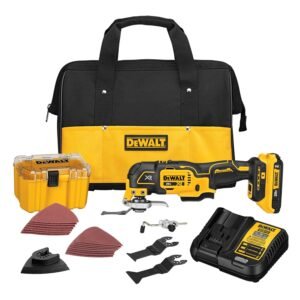
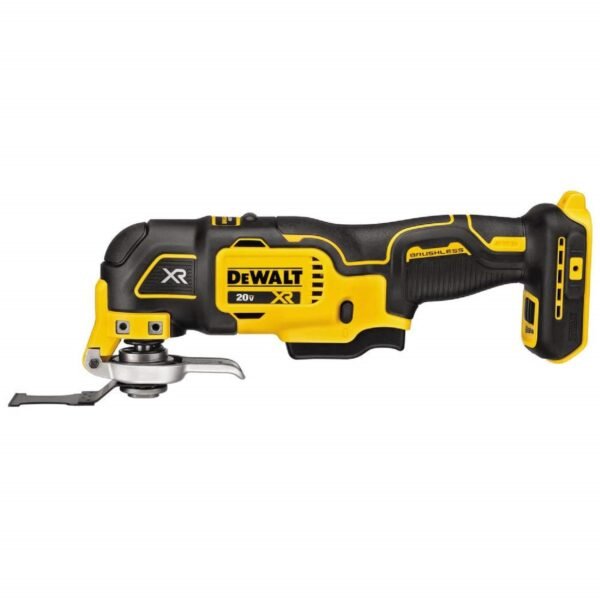
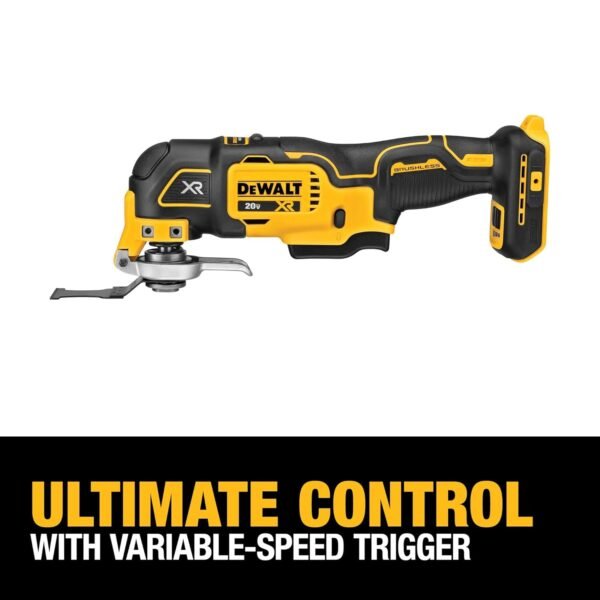
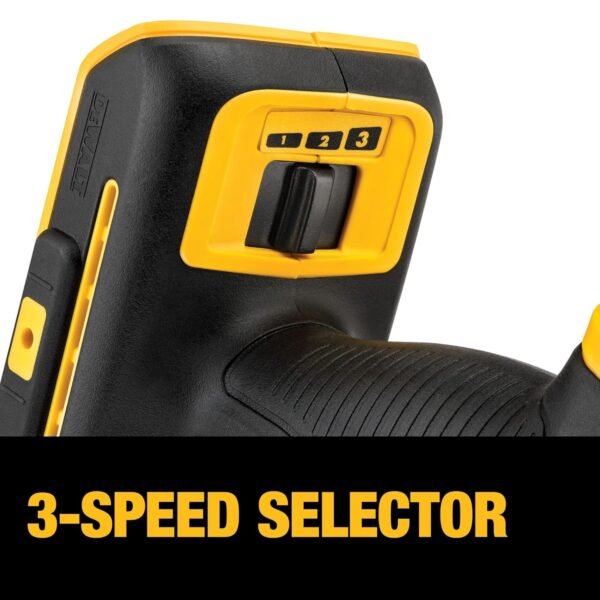
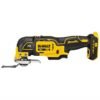
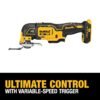
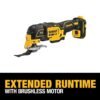
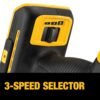
The DEWALT 20V MAX XR Oscillating Multi-Tool, Variable Speed, Bare Tool Only (DCS356B) is specified around a brushless motor, which is the component behind DEWALT’s runtime and efficiency claims for the model. A 3-speed selector sets the working range for each task, from delicate trimming at the low setting to aggressive cutting at the high one, and the tool is rated for drywall, wood, and metal accessories. The dual-grip variable speed trigger layers finer control on top of that selector, so speed can be modulated within a chosen band rather than only between bands. Buyers comparing across the oscillating tool category will find that two-stage speed control is not universal at this price.
Design and Ergonomics Affecting Daily Use
The listed weight is roughly 2.4 pounds as a bare tool, which is low enough to keep overhead and extended work manageable. The rectangular shape and composite housing give a body that is rigid without the bulk of a metal case, and the barrel diameter is sized to be held either in one hand or with a second hand over the head. A bright LED sits near the blade area, which is the position that matters most for plunge cuts under cabinets and in dark corners. The Quick-Change accessory system is the other ergonomic specification: blade swaps require no separate wrench, which removes the most common interruption in multi-tool work.
Universal Accessory Compatibility
The universal accessory adapter is the specification that keeps the tool off a proprietary blade system. Third-party oscillating blades from the common fitting standards mount directly, which widens the sourcing options and generally lowers the cost per blade. That flexibility lets one tool cover cutting, sanding, scraping, and grinding, since each job needs a different accessory rather than a different tool.
Benefits of Brushless Motor Technology
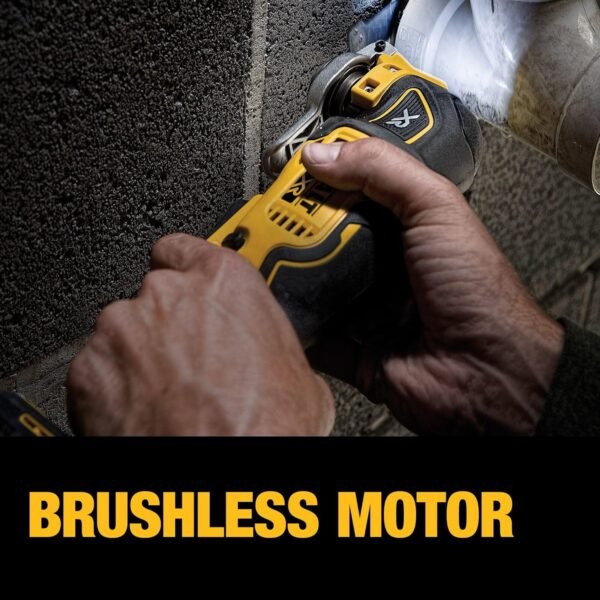
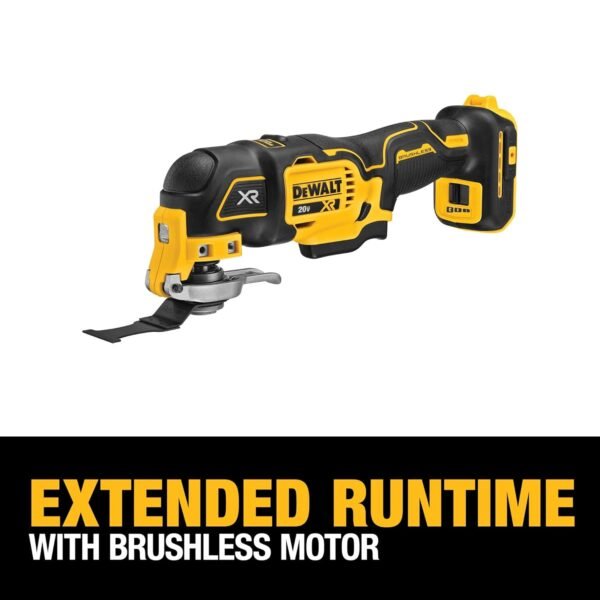
DEWALT states a 57% longer runtime for the brushless motor compared with a brushed equivalent. That claim is the manufacturer’s own, though the underlying engineering is well established: brushless motors waste less energy as friction and heat, so they draw less from the battery for the same output. In practice the specification points to fewer battery swaps on longer jobs, cooler running, and less mechanical wear over the tool’s life. It positions the DCS356B for sustained use rather than short bursts.
Price Performance and Value Proposition
On price-to-quality ratio the tool is reasonable rather than cheap. Build quality, the brushless motor, and the accessory system account for the premium over budget multi-tools. The battery and charger are excluded, which is the standard bare-tool arrangement and only makes sense for buyers already on the 20V MAX platform. For anyone starting fresh, the DEWALT DCS356C1 kitted version of the same tool is usually the better arithmetic.
Drawbacks and Limitations to Keep in Mind
The specification has gaps worth naming. No battery or charger is included, so the sticker price is not the entry price. The variable speed trigger gives precise control but takes familiarity for anyone used to a simple on/off switch. The LED, although bright, sits at a fixed angle and can throw a shadow depending on blade position, which sometimes means repositioning the workpiece rather than the tool. Oscillating tools are inherently loud at high speed, so hearing protection is sensible during prolonged use.
Competitive Options in the Oscillating Tool Market
Against the Bosch GOP series and Makita’s oscillating range, the DEWALT differentiates on quoted runtime and tool-free accessory changes. Bosch tends to lead on vibration damping and housing heft, though its accessory systems are often more involved. Makita’s XMT03Z 18V cordless multi-tool matches it closely on power, and the Milwaukee M18 oscillating tool is the other obvious cross-shop. Several rivals include batteries and chargers in the box, which is more convenient for first-time buyers. Within DEWALT’s own range, the DEWALT DCS354B brushless oscillating tool is the other 20V option.
Positive Features Worth Highlighting
- Brushless motor with a claimed 57% runtime gain over brushed
- Quick-Change accessory system makes blade swaps tool-free
- Universal accessory adapter ensures broad compatibility
- Bright LED improves visibility in dark or tight workspaces
Areas for Improvement
- Battery and charger not included, adding to initial setup cost
- Variable speed trigger requires a learning curve for precise control
- LED placement can cause shadowing during intricate cuts
- Tool noise level is relatively high, so ear protection is advisable
Taken as a specification, the DCS356B combines a brushless motor, two-stage speed control, and an open accessory standard in a body under two and a half pounds. It covers a wide range of tasks, though newcomers should budget for a battery and expect a short adjustment period on the trigger. It fits both professional and DIY kits, particularly for anyone already invested in the 20V MAX battery platform.