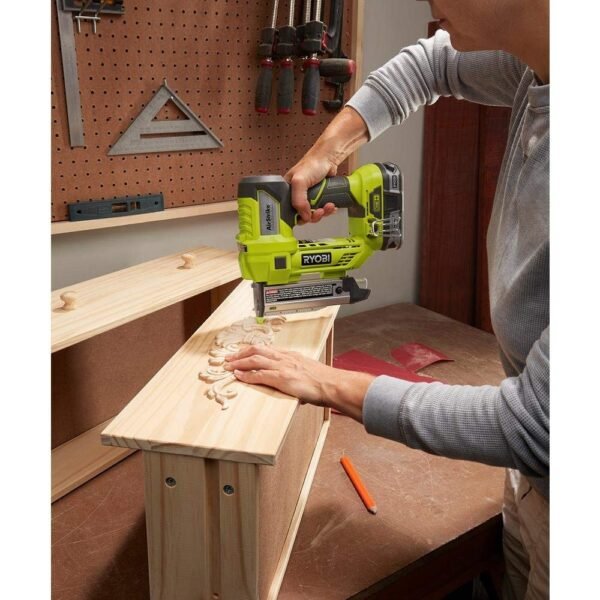
Description
Positive Features of the Ryobi P318 18-Volt ONE+ Lithium-Ion Cordless AirStrike Pin Nailer
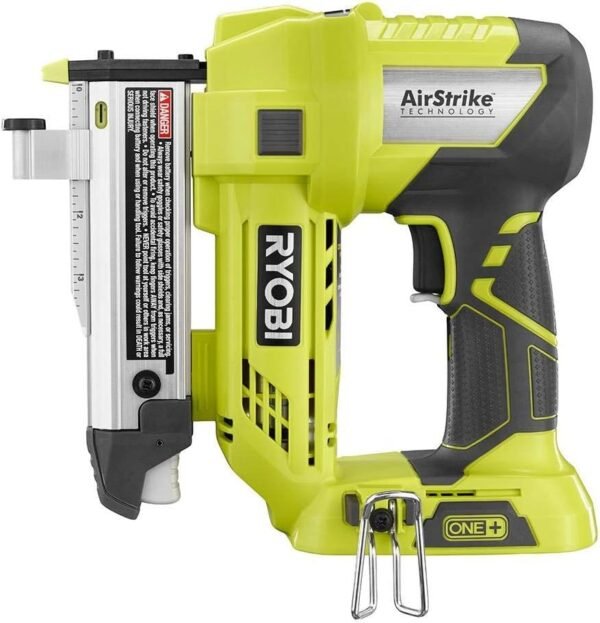
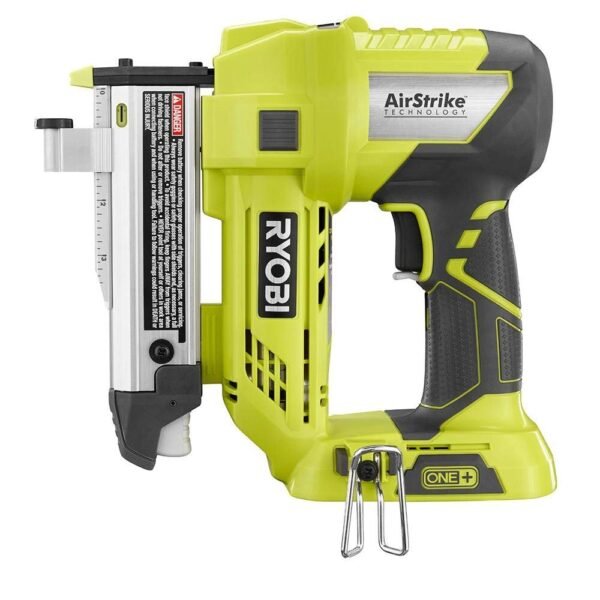
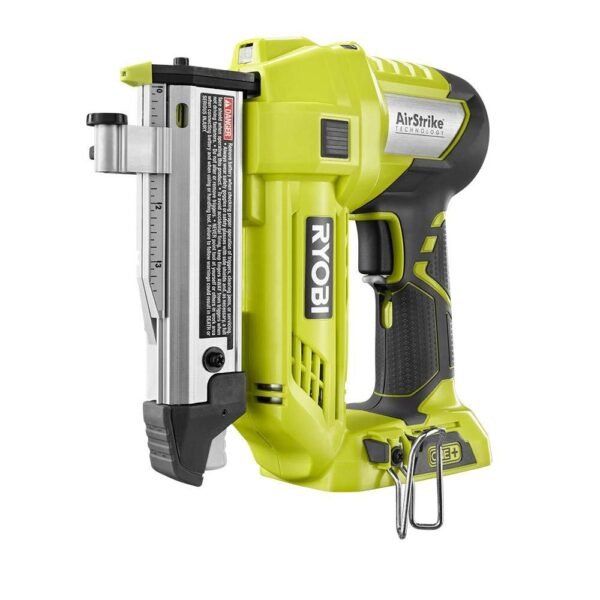
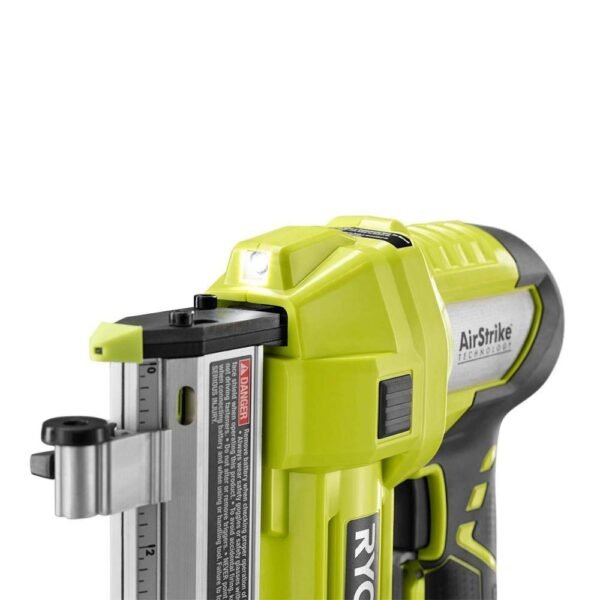
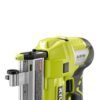
The Ryobi P318 18-Volt ONE+ Lithium-Ion Cordless AirStrike 23-Gauge 1-3/8 inch Headless Pin Nailer is specified with a double-action trigger design that supports sequential driving, the firing mode most suited to precise placement rather than speed. Ryobi also lists a dry-fire lockout, which stops the tool from cycling once the magazine is empty and is the feature most directly aimed at extending the driver mechanism’s life. The GRIPZONE overmold handle is the comfort element on the spec sheet, targeting hand fatigue over long sessions, and an integrated LED light is fitted to illuminate the work surface in dim corners. Note one inconsistency in the listing data: the product name specifies a 23-gauge headless pin nailer, while the same listing positions the tool among cordless finish nailers, so buyers should read the fastener spec rather than the category label.
- Smooth sequential driving with double-action trigger
- Dry-fire lockout enhances durability
- Comfortable GRIPZONE overmold reduces hand fatigue
- LED light improves visibility in low-light conditions
Flaws Worth Considering
Against those strengths sit several shortcomings that come straight off the specification. The body is plastic, which keeps weight down but does not match the rigidity of a metal-bodied pin nailer, and that is the usual trade-off in this price bracket. The tool is rated for light-duty work, so denser hardwoods sit at the edge of what a 23-gauge pin can be expected to seat cleanly. Neither a battery nor a charger is included, so the purchase assumes an existing Ryobi 18-volt kit or budget for one on top. Finally, the 90-day limited warranty is short for a power tool, particularly next to competitors that list multi-year cover in the same segment.
- Plastic construction feels less durable than metal alternatives
- Rated for light-duty work rather than dense hardwood
- Batteries and charger sold separately
- Limited warranty period
Design and Ergonomics: A Comfortable Fit
The compact and lightweight design is the headline of the physical spec, aimed at detailed woodworking, upholstery, and craft use. The listed weight is just under five pounds, which is modest for a cordless tool carrying its own power source, and the balance point sits close to the grip because the battery mounts at the base. The GRIPZONE overmold adds a rubberised surface that resists slipping without requiring a tight squeeze, which matters on repetitive pin placement. The cordless design removes both the hose and the outlet from the equation, so the tool can be carried to the work rather than the work brought to a bench. Anyone comparing across the finish nailer category will find few pin nailers this light.
Performance and Versatility in Everyday Use
The driving range covers 23-gauge headless pins from 1/2 inch to 1-3/8 inches, which spans most trim, lightweight molding, and small craft fastening. Headless pins leave a hole small enough that filling is often unnecessary, which is the reason to choose this gauge over an 18-gauge brad. The dry-fire lockout protects the mechanism when the magazine runs dry, a genuine benefit on long runs where the pin count is easy to lose track of. The LED light matters most in shadowed or cramped spaces, where pin placement accuracy falls off fastest. As part of Ryobi’s 18-volt lithium-ion ONE+ platform, it shares batteries with the rest of the range, which is the practical argument for buying it over an unrelated brand.
Value Assessment: Is It Worth the Investment?
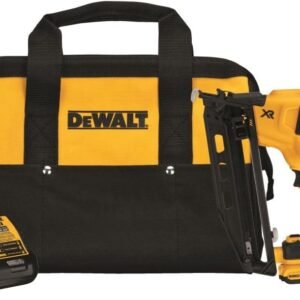
The price sits in the mid-tier of cordless finish and pin nailers. Weighed against the listed features, namely dry-fire lockout, LED work light, and platform compatibility, that positioning is reasonable. The excluded battery and charger are the caveat, since a first-time buyer has to add both to arrive at a working tool. Compared with rival brands, the Ryobi leads on ergonomics and ease of setup rather than on outright build quality, and it is not the right pick for heavy-duty woodworking. For light trim and craft work it represents sensible spending without a meaningful compromise in finish quality. Buyers who want a heavier-duty 16-gauge tool for the same trim work should compare the DEWALT DCN660 20V MAX XR 16-gauge finish nailer.
Alternative Offerings and How This Nail Gun Compares
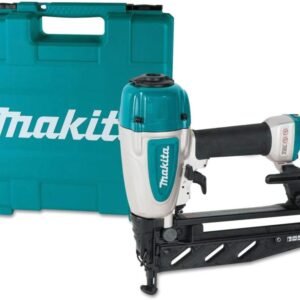
Cross-shopped cordless pin nailers include the Dewalt DC618 and the Makita AF505N. The Ryobi P318 competes on cordless convenience and handle comfort, but its plastic body and included-battery position leave it behind competitors on build materials and quoted runtime. The Dewalt option is built for heavier sustained use, while Makita’s reputation in this class rests on precision and durability. Both usually carry a higher price. For hobbyists and casual users, particularly those already holding Ryobi batteries, the P318 lands well on price to quality ratio. Its dry-fire prevention and LED lighting are the two features rivals in the same bracket most often omit. Buyers who already run a compressor and want a compact alternative should compare the Makita AF601 finish nailer.
Handling and Safety Features
The dry-fire lockout doubles as a safety feature: by stopping the tool firing empty, it prevents both mechanism wear and unexpected marks on the workpiece. The double-action trigger requires a two-step sequence before the tool will fire, which is the standard guard against accidental releases and is particularly relevant when working at odd angles or in confined spaces. The headless pin format is itself a safety and quality choice, since a headless fastener is far less likely to split delicate trim than a headed brad. For anyone stepping up to a fastener with more holding power, an 18-gauge tool such as the Senco FinishPro 18 brad nailer is the usual next size.
User Experience and Practical Observations
The tool is aimed at users who are not necessarily experienced with power tools, and the specification reflects that: light weight, battery power, and a trigger that has to be deliberately actuated. The double-action trigger does carry a short learning curve for anyone used to a single-pull tool. Reloading pins is a straightforward magazine operation, though the listed magazine capacity is modest, which means more frequent refills on larger jobs. Overall the design prioritises precision and comfort, the two attributes that matter most in cabinetry, picture framing, and upholstery. Ryobi lists this model under two separate product entries, and the second Ryobi P318 AirStrike listing quotes a different weight figure for the same tool.
Taken as a specification rather than a performance claim, the Ryobi P318 23-gauge pin nailer is a tool built around user-friendly features: sequential firing, dry-fire protection, a work light, and platform batteries. Its limitations are the plastic body, the short warranty, and the excluded battery. For light woodworking and finishing, the cordless convenience combined with the safety and comfort features makes it a credible option for anyone who needs a pin nailer without a large outlay.