Description
Ergonomic Design for Tight Spaces and Reduced Fatigue
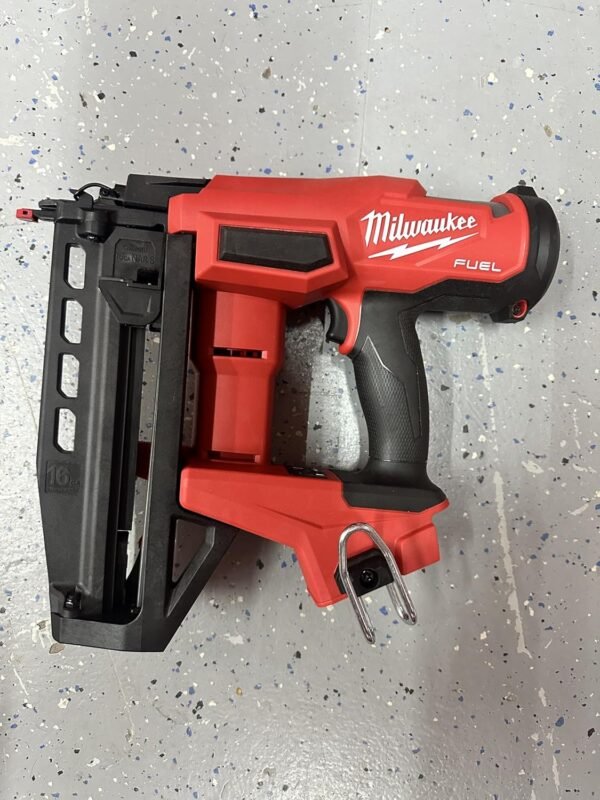
The Milwaukee 3020-20 M18 FUEL 18-Volt Lithium-Ion Brushless Cordless Gen II 16-Gauge Straight Finish Nailer is built around a compact and ergonomic design aimed squarely at cramped corners and tight trim work. The straight body and slim nose are specified for maneuvering around door casings and narrow moldings where bulkier tools struggle to fit. Listed weight sits just over eight pounds, and Milwaukee positions the balance point to limit strain over long runs. Owner ratings on high-volume trim work echo that claim, with repeat comments about lower fatigue than heavier finish nailers in the same class.
A reversible belt hook keeps the tool within reach between fastenings, and an LED work light covers dimly lit spaces. Taken together these are comfort and convenience features aimed at professionals and serious DIYers alike, and they line up with what buyers shopping the finish nailer category tend to prioritize.
Power and Performance That Impress
The headline pairing is the POWERSTATE Brushless Motor and the REDLINK PLUS Intelligence system. Milwaukee describes the combination as delivering a pneumatic-like nailing response with zero ramp-up time, meaning nails fire without the spool-up delay common to earlier cordless designs. The stated rate is up to 3 nails per second, which puts the tool in pneumatic territory on paper while leaving hoses and compressors out of the picture.
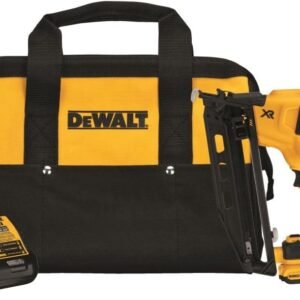
A nitrogen air spring mechanism handles the drive, and the manufacturer credits it with consistent nail depth in soft pine and denser hardwoods alike. Consistent countersinking is what cuts down on filler and sanding afterward, and that is the practical argument for the mechanism on cabinetry and trim. Anyone weighing the same 16-gauge job from an angled magazine can compare the DEWALT DCN660D1 cordless finish nailer, which covers similar work from a different battery platform.
Versatile Features and Settings for Precision
This cordless finish nailer lists tool-free depth adjustment, which matters when moving between wood types and nail lengths without stopping to hunt for a wrench. The tool-free jam clearing latch addresses the other routine interruption. Jams are a fact of life with any nailer, and how quickly they clear is what keeps a run moving.
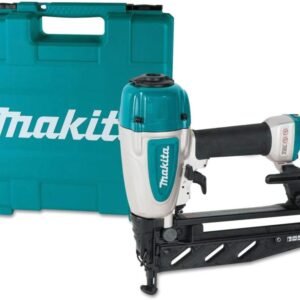
Two firing modes are specified: sequential and contact actuation. Sequential is the controlled option for delicate molding, while contact actuation suits repetitive runs such as baseboards. Both modes on one trigger is standard at this level, so the deciding factor is usually the battery ecosystem. On that point the Makita XNB02Z 16-gauge cordless finish nailer is the obvious cross-shop for an LXT shop.
Battery Life and Compatibility
Paired with the M18 REDLITHIUM CP2.0 battery, the tool is rated at up to 700 nails per charge. Pack interchange across the M18 line is the practical benefit, since a shop already running M18 tools can rotate batteries rather than wait on a single charger. Compatibility is listed for all M18 REDLITHIUM batteries, so the nailer drops into an existing Milwaukee kit without new chargers or adapters.
Batteries are sold separately, which belongs in the up-front budget rather than the running cost. Once packs are on hand, the rated runtime and power delivery are pitched against pneumatic systems rather than against other cordless nailers.
Good Points
- Compact and ergonomic, specified for tight spaces and lower user fatigue.
- Powerful brushless motor and REDLINK PLUS Intelligence for consistent, pneumatic-like nailing.
- Tool-free depth adjustment and jam clearing for quick on-the-job tweaks.
- Versatile firing modes (sequential and contact) to suit different tasks.
- Rated at 3 nails per second with consistent depth claimed across wood densities.
- Compatible with the M18 battery system, with strong rated runtime and interchangeability.
Areas for Improvement
- Batteries are not included, which means additional purchases upfront.
- At 8.03 pounds, it is not the lightest nailer in its category, which could tire users during prolonged overhead work.
- The plastic construction reads as durable but less premium than some metal-bodied competitors.
- Magazine capacity is limited to 110 nails, which can mean frequent reloads on large jobs.
Product Rivals
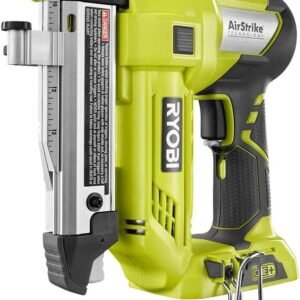
Set against category peers such as the DeWalt DC618 or Paslode CF325XP, a few differences stand out on the spec sheets. The Milwaukee runs cordless on a brushless motor, so it needs neither gas cartridges nor a compressor. Paslode’s gas-actuated design fires quickly but depends on fuel cells and carries more maintenance. The older DeWalt is lighter on paper but gives up rated power and runtime by comparison. Shoppers working to a tighter budget often cross-shop the Ryobi P318 cordless finish nailer, which trades output for a lower entry price.
The REDLINK PLUS Intelligence system also covers overload protection and tool-to-battery communication, which Milwaukee positions as a durability advantage over simpler electronics. Trim work that leans lighter than 16 gauge is better matched to an 18-gauge tool such as the Senco FinishPro 18 brad nailer, which leaves smaller holes in delicate stock.
Value Proposition
Weighed against the feature list, the price-to-quality ratio reads as reasonable. The tool removes the need for compressors, hoses, and gas cartridges, which simplifies the job site and cuts related expenses. The tool-free adjustments and jam clearing are time savers on paper, and time saved is the clearest return on a trim tool.
For professionals who depend on consistent performance and cordless convenience, the spend is easier to justify. Anyone already holding M18 batteries gets the strongest case of all, since the platform cost is already sunk. The initial outlay runs higher than pneumatic or gas-powered equivalents, but reduced maintenance and consumables offset that over a working life.
Positive Features
- No ramp-up time between nails, per the manufacturer’s stated firing behavior.
- Clean nail holes from consistent depth control, which reduces finishing work.
- LED work light improves visibility in low-light conditions.
- Reversible belt hook adds convenience for carrying and storage.
Limitations
- The tool’s weight can be cumbersome during extended overhead nailing.
- Lack of included batteries increases the initial purchase cost.
- The plastic body may read as less rugged than metal alternatives.
- Magazine size can require more frequent reloads on large-scale jobs.
On specifications and published owner feedback, this finish nailer combines power, convenience, and a well-considered feature set in a package aimed at professional carpenters and serious DIY enthusiasts. The drawbacks are real but minor, and the rated performance, battery compatibility, and ergonomic design keep it prominent in the cordless finish nailer market.