



Description
Highlights of the RYOBI ONE+ 18-Gauge Cordless AirStrike Narrow Crown Stapler
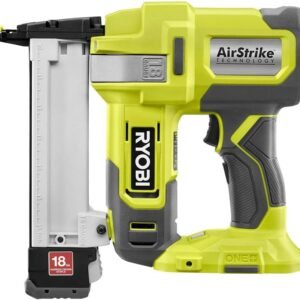
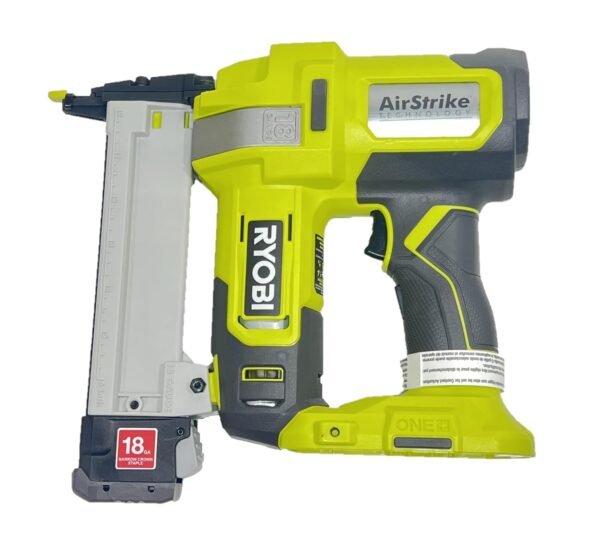
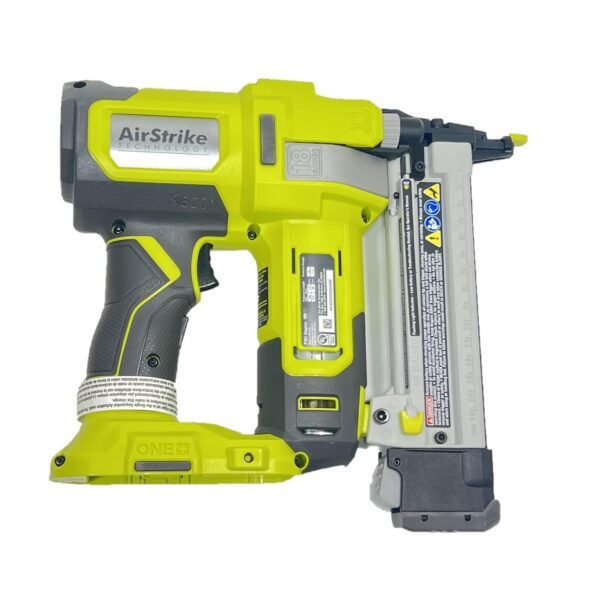
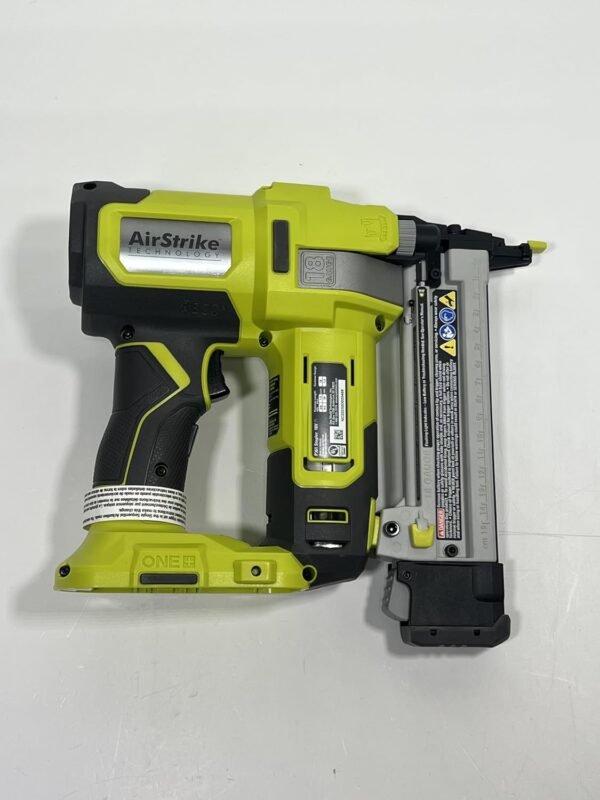
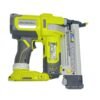
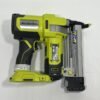
The RYOBI ONE+ 18-Gauge Cordless AirStrike Narrow Crown Stapler P361 Green is built around a promise of pneumatic-grade output with none of the pneumatic hardware. AirStrike Technology removes the compressor, the hose, and the gas cartridge from the equation, which is what makes setup short and the tool easy to move between work areas. RYOBI rates it to sink 1-1/2″ staples into hardwoods, a meaningful claim for a cordless stapler, and lists lattice work and floor underlayment among its intended jobs. The lightweight design, described by RYOBI as the lightest in its class, is aimed directly at fatigue over long sessions. Rated capacity runs to 1,700 staples per charge, which is enough to cover most single-day tasks without a battery swap.
Good Aspects of the Stapler
- The tool-free depth of drive adjustment is the headline usability feature, letting staple depth change between materials without a separate tool.
- RYOBI specifies a 26% smaller driver blade compared to the P360, which the company credits for improved drive quality and placement accuracy.
- As part of the RYOBI ONE+ system, it shares an 18V battery platform with over 260 other tools, which is significant leverage for anyone already holding ONE+ packs.
- The metal construction is specified for job site conditions rather than occasional bench use.
Shortcomings
- The stapler is listed at about 5.15 pounds, light for its class but still a load across a full day of overhead or repetitive work.
- Hardwood driving is rated, but runtime on very large-scale projects will need backup batteries rather than a single pack.
- The price point sits above several other cordless staplers, which is a real barrier for budget-focused buyers.
- Listing data contradicts itself on the adjustment dial: it is described as controlling air pressure speed, which does not fit a cordless AirStrike tool that carries no compressed air at all. The dial being described elsewhere as depth of drive is the reading consistent with the rest of the specification.
Design and Usability
The compact dimensions (8.8 x 3.2 x 10.8 inches) keep it manageable in hand and in a tool bag. The green color is standard RYOBI livery and does make the tool easy to spot on a cluttered bench. The ergonomic grip and the balance point are the design elements RYOBI cites for reduced wrist strain. Loading is simple, and the tool-free depth adjustment dial is what controls how far each staple sets, whether the material is delicate trim or heavier stock. Comparable narrow crown tools are laid out side by side across the finish staplers we cover.
Performance and Efficiency
The AirStrike system is the whole argument for this tool: cordless operation without giving up driving force. RYOBI specifies it for hardwood flooring underlayment and lattice, driving staples flush rather than proud. The absence of hoses or compressors means no cables underfoot and no compressor cycling in the background. That quieter operation is a practical advantage indoors and in occupied buildings. On battery, the rated 1,700 staples per charge covers most jobs, though heavy users should plan on a second pack. A pneumatic tool such as the Hitachi N3804AB3 finish stapler remains the lighter-in-hand option for shops that already run air.
Alternative Offerings
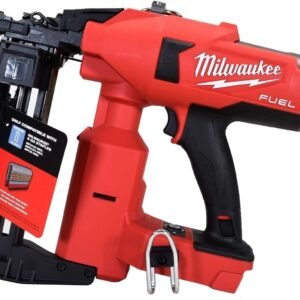
Against cordless rivals such as the DEWALT DCN680B and the Bostitch BCN662D1, the RYOBI’s case rests on low weight and on the breadth of its battery platform. Competing tools are frequently specified with more raw driving force and larger magazines for industrial-scale work, and that is the trade being made here. The nearest direct comparison is the Milwaukee M18 FUEL 18Ga narrow crown stapler, which targets the same fastener and the same jobs from a professional-grade platform. For anyone juggling a range of tools rather than staple work alone, ONE+ compatibility carries weight that a spec sheet alone does not capture.
Value Proposition
On price versus performance, this stapler delivers where cordless freedom and simple operation are the priorities. It is not the cheapest option, but skipping hoses and compressors, combined with membership in the large RYOBI ONE+ ecosystem, makes it a sound purchase for existing ONE+ owners and for anyone who wants a capable cordless stapler without an air setup. RYOBI lists a 3-year manufacturer’s warranty, which supports the quality claim. For a staple gun rated to handle hardwoods without a pneumatic rig behind it, the price-to-performance balance holds up. Owners staying inside the same battery line can also look at the RYOBI P317 ONE+ crown stapler, which shares packs and chargers.
Benefits for Everyday Use
The tool suits quick home improvement work and professional jobs alike, and the low weight plus simple controls make it approachable for less experienced users under supervision. Quiet operation and cordless convenience are the features that matter most on indoor jobs, where noise and trailing cords are the main irritants. The rated ability to set staples into tough materials without marking the surface is what keeps it useful beyond light-duty tasks, and the adjustable depth feature is the setting that spans delicate trim and heavier work. Where a nail rather than a staple is called for, the Senco FinishPro 18 brad nailer covers the same 18 gauge territory.
Downsides to Keep in Mind
- The weight, while light for its class, still accumulates over prolonged use.
- Rated runtime is good but sits behind some industrial competitors that offer longer service per charge.
- The depth adjustment dial is sensitive enough to need a careful hand, which can frustrate newcomers.
- As a premium cordless tool, the initial cost runs above corded or pneumatic options, a barrier for beginners and casual users.
Taken as a whole, the specification set offers a strong blend of portability, driving power, and adjustment precision, with the caveats above worth weighing against workload and budget.