Description
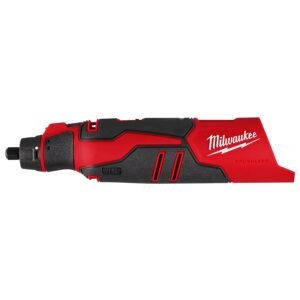
Highlights of Milwaukee Cordless Rotary Tool, 12.0V
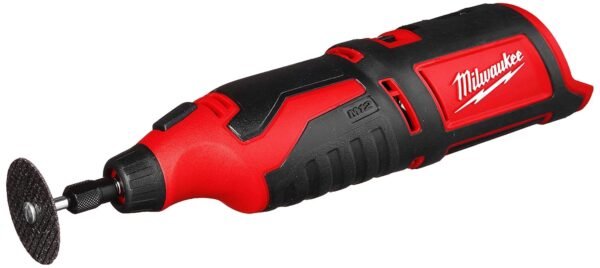
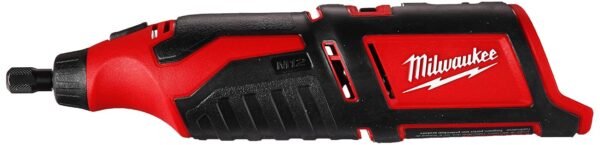
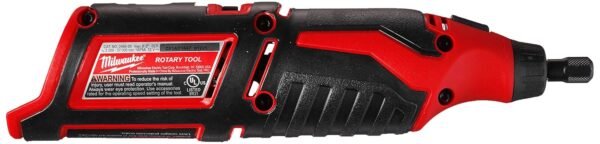
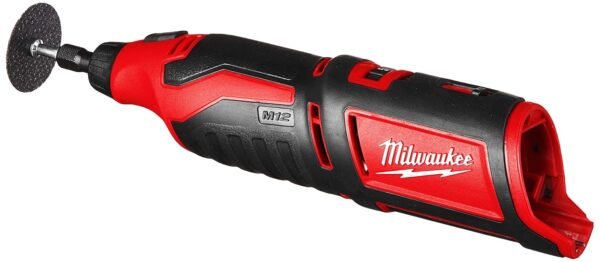
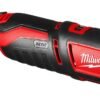
The Milwaukee Cordless Rotary Tool, 12.0V is specified around a motor that holds speed under load, which is the single quality that separates a working rotary tool from a hobby one. The variable speed dial spans 5,000 to 32,000 RPM, and that upper figure is high for a cordless tool in this class. The range is what lets one tool cover delicate sanding at the low end and aggressive cutting or grinding at the top. The 1/8-inch collet is the industry standard size, so the tool accepts the same cutting wheels, mandrels, burrs, and sanding drums already sitting in most workshop drawers. Its compact size at 9.5 inches long and 1.3 pounds is what keeps it usable overhead and inside cabinets, panels, and other confined work areas where trades spend much of their time.
- Powerful motor delivers consistent performance
- Wide variable speed range from 5,000 to 32,000 RPM
- Compatible with numerous 1/8-inch rotary tool accessories
Drawbacks to Keep in Mind
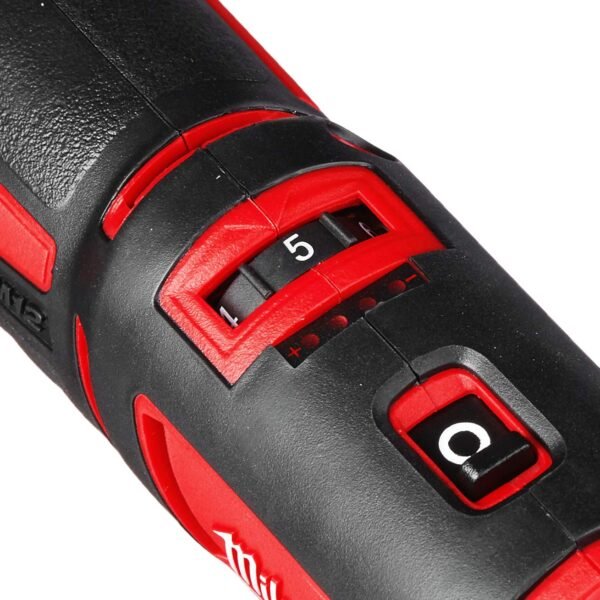
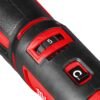
The listing data contradicts itself on the battery. It states that the battery is not included and then quotes a 1.5Ah capacity as though it were a fixed attribute of the tool. Both cannot describe the same purchase: with no pack in the box, runtime depends entirely on which M12 battery is fitted, and that range runs from compact 1.5Ah packs up to much larger capacities. Treat 1.5Ah as the smallest likely pairing rather than a specification of the tool, and confirm what ships in the box before buying. The slide on/off switch with speed dial is the other common criticism, since precise adjustment by feel alone is awkward, particularly in gloves. The plastic housing is solid enough for its class without matching the ruggedness of metal-bodied alternatives.
- Battery not included, sold separately
- Limited runtime due to 1.5Ah battery capacity
- Slide switch can be difficult to adjust precisely
Ergonomic Design and User Comfort
The handle design follows the slim, pen-adjacent profile that detailed work requires, since a rotary tool is guided with the fingers rather than gripped with the fist. Low weight is what keeps that grip sustainable through intricate tasks. The LED light at the front is a genuinely useful inclusion on a tool that spends its life pointed into cabinets, junction boxes, and other unlit spaces. The compact footprint means it travels in a toolbox rather than requiring its own case. The one caveat in the dimensions is length: at 9.5 inches, the body is longer than the smallest hobby rotary tools, which matters when working inside a very tight cavity.
Performance Compared to Popular Competitors
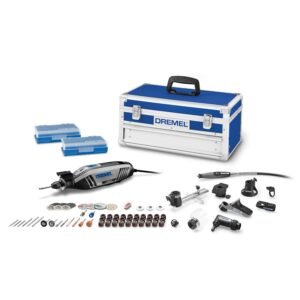
Against Dremel’s 12V models and Bosch’s compact rotary tools, this Milwaukee competes on motor output and speed control. The 10-percent faster top speed Milwaukee claims over competitors translates into faster material removal on cutting and grinding work. Dremel’s advantage is packaging, since kits like the Dremel 8240 12V cordless kit include a battery and charger, and the brushless Dremel 8250 answers on motor technology. Bosch generally offers a smoother switch arrangement and more progressive speed transitions. Milwaukee’s durability features, including grinder-style exhaust ports and a protected front bearing, are the basis of its longer-life claim, which is a manufacturer projection rather than a measured result. For buyers who want raw speed and cordless reach, this model competes well; for buyers who want everything in one box, the kits are the better route.
Value Proposition
The value for money case is strongest for anyone already running Milwaukee’s M12 platform, where the tool-only price is the entire cost. The motor, variable speed control, and accessory compatibility are what the price buys. Starting without batteries, the total climbs quickly once a pack and charger are added. The 5-year warranty is Milwaukee’s own statement of expected service life and is longer than much of the field offers. For work that spans plumbing, electrical, and remodeling, where a rotary tool is asked to cut, grind, and polish in the same day, the specification fits, and the brushless M12 rotary tool is the newer option on the same platform. It is not the cheapest option in the category, and the build quality is what the premium is spent on.
Versatility and Accessory Compatibility
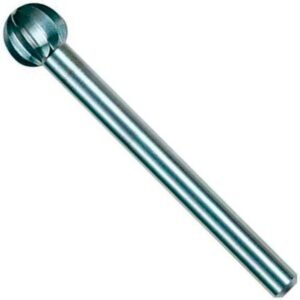
The collet accepts shank sizes from 1/32 inch up to 1/8 inch, which opens the tool to the thousands of cutting, grinding, sanding, and polishing accessories built to that standard. That compatibility, not the motor, is what makes a rotary tool versatile, because capability is added by the accessory rather than the tool. The supplied cutting wheels and mandrel cover common metal trimming, carving bits such as the Dremel 100 fit the same collet, and accessory changes use the provided wrench. Trimming metal, smoothing wood edges, and polishing surfaces all sit within the same speed range with only a bit change between them. Cordless operation is what makes that flexibility usable on a job site rather than only at a bench, and for dedicated metal cutting the M12 cut-off tool covers the heavier end of the same work.
Power and Battery Technology
The tool runs on Milwaukee’s REDLITHIUM battery technology, which is the platform’s cell and pack management system and is rated for more work per charge than earlier lithium-ion designs. A 12V motor is sufficient for most maintenance and remodeling tasks at this scale, and capacity, not voltage, is what limits a long session, so a spare pack matters more than any other accessory. The grinder-style exhaust ports route cooling air through the motor, which is what allows sustained running without thermal cutback. The slide on/off switch with integrated speed dial makes adjustments quick, though there is no lock-on function for continuous operation without holding the switch.
Build Quality and Durability
The durability features are specific rather than general: a protected front bearing shields the most exposed moving part from debris, and the exhaust port design manages heat, which is the other main cause of early failure. High-carbon steel is used in the collet and accessories, where wear resistance matters most. The outer casing is largely plastic, which is sturdy for daily use without matching metal-bodied competitors on impact resistance, so a protective case is sensible for tools that travel. For professional use in plumbing, electrical, and general maintenance, the construction is appropriate to the work.
The overall picture is a rotary tool with a strong motor, wide accessory compatibility, and a body sized for real working conditions. It suits professionals and committed DIYers who need cordless variable speed control they can rely on. The bare-tool packaging and the switch design are the reservations, and the battery capacity listed in the source is the detail to verify first. Comparable tools across brands and formats are covered in our rotary tool reviews.