

Description
What the Nitecore LR70 Specification Covers
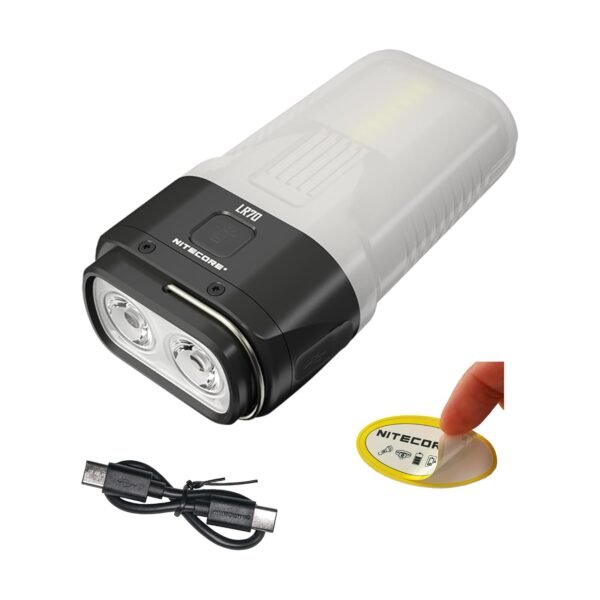
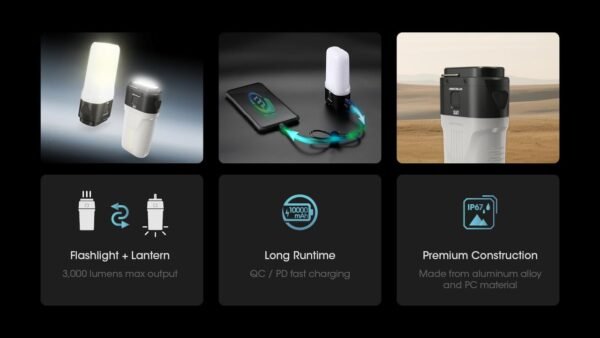
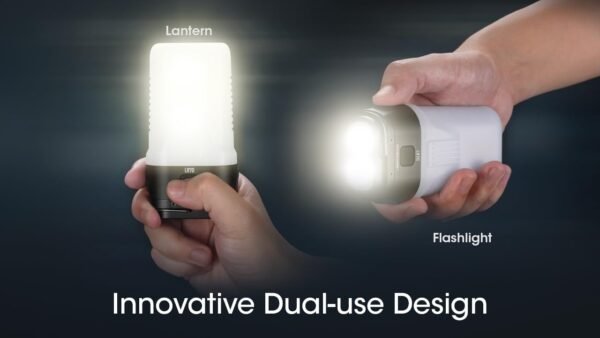
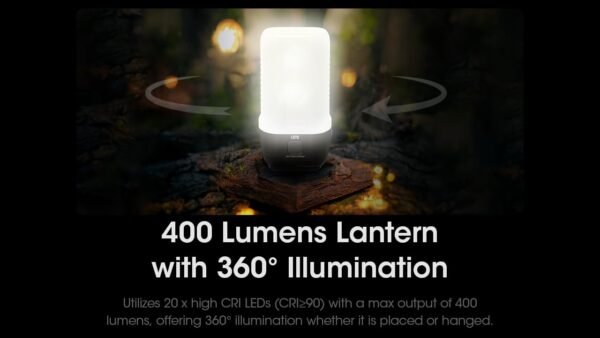
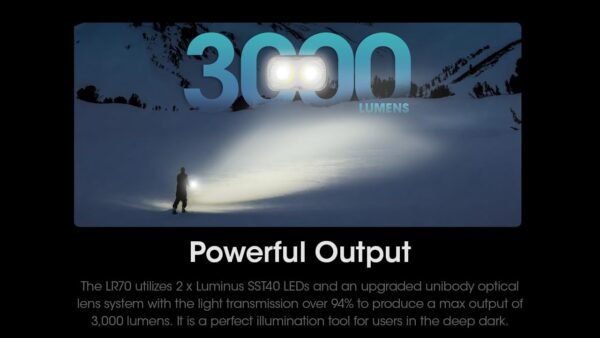
The Nitecore LR70 Lantern Flashlight is specified as three devices in one housing: a flashlight, a lantern and a power bank. The flashlight side claims 3000 lumens with a stated beam reach of nearly 328 yards, which is throw rather than area light and is the figure that separates it from lanterns that only ever illuminate a table. The lantern side runs at 400 lumens with an optional red output for preserving night vision, a level intended for sitting beside rather than working under. Very few products in the electric lantern range attempt both jobs, and the compromise usually shows up in weight.
Charging is by USB-C with a USB-C to USB-C cable supplied, and the published 600 hour run time applies to the lowest output setting, as maximum run time figures always do. The third function is the one buyers either need or ignore entirely: the light doubles as a QC and PD capable charger, so it can put a charge back into a phone or a set of earbuds from its own cells.
- 3000 lumen flashlight mode with a stated 328 yard reach
- 400 lumen lantern mode with a red night vision option
- USB-C charging and a stated 600 hour run time on low
- Power bank output with QC and PD fast charging support
Limitations in the Specification
The listed weight of 9.56 ounces is the cost of the output and the cells, and it is heavier in the hand than a pocket flashlight of similar length, which matters if the light is held rather than set down. The aluminum body is durable but offers little grip texture, so wet or gloved hands are worth planning for. The listing is also inconsistent about weather sealing: it gives an IP67 rating, which covers dust and temporary immersion, while separately describing the waterproofing as limited. Confirm the rating against the Nitecore specification rather than the marketplace copy. Stated impact resistance is 1 meter, which is a drop from a table rather than from a cliff, and the brightness stepping is a mode cycle rather than a continuous dimmer.
- Heavier than a comparable handheld flashlight
- Smooth aluminum body offers limited grip when wet
- Listing conflicts on how far the IP67 rating goes
- Mode stepping rather than continuous dimming
Build and Dimensions
The aluminum alloy construction is what allows a 3000 lumen emitter to shed heat, and it is also why the device weighs what it does. Listed dimensions of 4.45 x 2.36 x 1.34 inches keep it inside a jacket pocket or a pack lid, and the black finish hides marks from normal use. The stated IP67 rating and 1 meter impact figure describe a light built for rain, mud and the occasional drop rather than for deliberate abuse, and the limited warranty is provided by Sysmax Innovations.
Cells and Charging
The listing states that two lithium-ion cells are included, so the light works out of the box with no separate battery purchase, and a power indicator reports state of charge, which is the feature that makes a rechargeable light trustworthy on a second or third night out. The USB-C port carries power in both directions: in to charge the light, and out to charge a phone at QC and PD rates. For anyone already carrying a power bank, that overlap is the argument for the whole product, since one device replaces two. The cost of that convenience is shared capacity: every percent given to a phone is a percent not available for light, so a night spent charging devices is a night with less run time in reserve. Planning around that is straightforward once the indicator is being watched, and it is the reason the low output levels matter more on this light than on a single-purpose lantern.
Modes and Practical Use
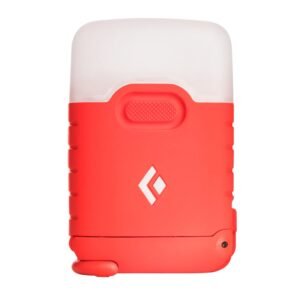
The three-way design covers different problems with one tool. The 3000 lumen flashlight mode is for reaching down a trail or across a yard; the 400 lumen lantern mode is for the space immediately around the light; the red mode is for keeping night vision intact while reading a map or moving around a dark camp. The handheld mounting type is the one gap, since there is no hook and no magnet, so the light stands on a surface or is held rather than hung from a tent roof. Compact lanterns designed to hang, such as the Black Diamond Zip on AAA cells, solve that problem at a fraction of the output.
How It Compares
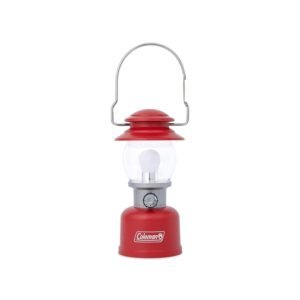
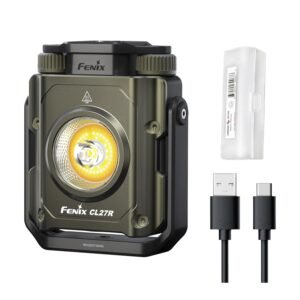
Against dedicated camp lanterns the LR70 is an outlier on brightness, because most of that field sits between 200 and 500 lumens and none of it throws a beam. The Fenix CL27R at 1600 lumens is the closest comparison and answers the mounting question with a magnetic base and a tripod thread, which the Nitecore lacks. Against a long-running battery lantern such as the Coleman Classic on D cells, the trade is peak output and recharging against stored readiness and disposable cells.
Price Against Specification
The price sits above simple camp lanterns and roughly where a dedicated handheld such as the Nitecore P20iX plus a small power bank would land, which is the honest way to judge it. Buyers who would otherwise carry two devices are getting a saving in weight and cost; buyers who only ever need area light at a campsite are paying for a 3000 lumen emitter that will rarely be used. Cheaper lanterns cover basic illumination for a fraction of the outlay, and the decision comes down to whether the flashlight and charging functions are needed on the same trips.
Where It Fits
The specification points at camping, emergency kits and vehicle use, particularly where charging is uncertain. Being able to top up a phone from the same device that lights the tent is the practical argument, and the red mode is the detail that appeals to anyone who cares about night vision. Read strictly as a spec sheet, the LR70 is a heavy, high-output, rechargeable multi-tool light with a stated IP67 rating and no hanging hardware, and those last two points are the ones worth confirming before it becomes the only light in the pack.