






Description
Advantages of the Kidde Hardwired Smoke Detector
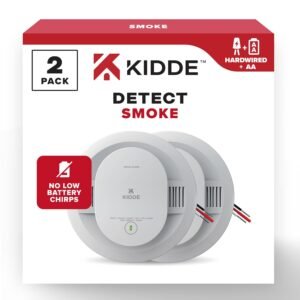
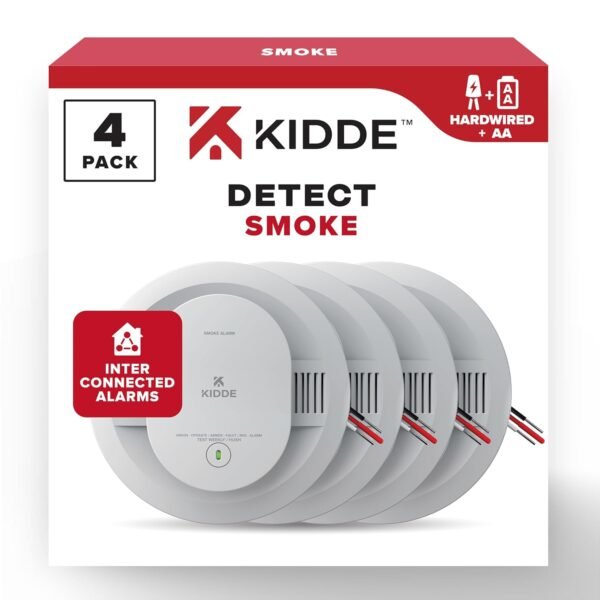
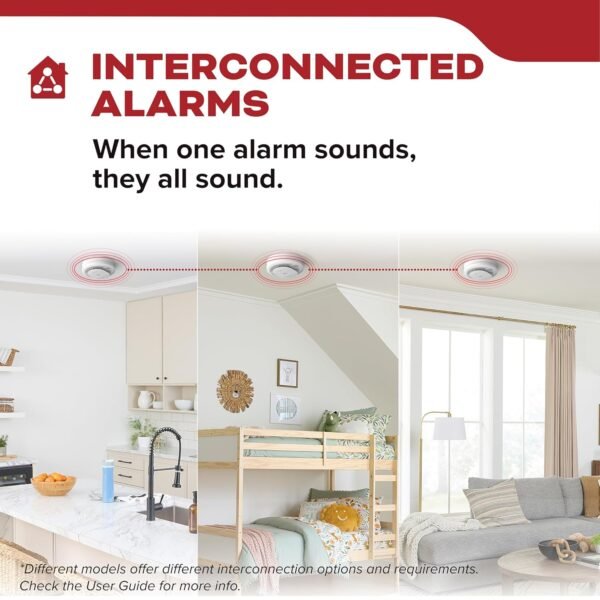
The Kidde Hardwired Smoke Detector with AA Battery Backup is defined by its interconnectable design. When one alarm detects smoke, every interconnected unit on the loop sounds at the same time, which is the whole argument for wired interconnect in larger homes and multi-room layouts: an event that starts far from the bedrooms is still announced in them. The alarm is rated at 85 decibels, and a flashing red LED accompanies the sound as a visual signal. Kidde also lists enhanced sensing technology aimed at cutting the cooking-related nuisance alarms that plague detectors near kitchens. The self-testing function checks internal components on its own schedule, which supplements rather than replaces the weekly manual button test the manufacturer specifies. One inconsistency in the listing data is worth flagging before ordering: the product name describes a single 20SAR alarm, while the description covers a package of four alarms with AA batteries and mounting hardware. Confirm the quantity on the listing, since the price only makes sense against the right pack size.
- Interconnectable alarms sound together across the house
- 85-decibel alarm with a flashing LED visual signal
- Enhanced sensing aimed at reducing nuisance alarms
- Self-testing function monitors internal components
Drawbacks to Consider
The specification carries real costs. Installation is electrical work, and retrofitting hardwired alarms in an older property is rarely straightforward: the job should follow local electrical code, and where the existing wiring is unfamiliar a qualified electrician is the right call, which adds to the total cost. The backup batteries require replacement every six months according to Kidde’s own schedule, and across four units that is a recurring task rather than an afterthought; a missed replacement leaves the alarm without cover during an outage. Nuisance alarms are reduced rather than eliminated, and units near steamy bathrooms or busy kitchens still sound occasionally. The 5-inch housing is a plain disc that sits visibly on a ceiling, which matters to some buyers and to nobody else.
- Installation is electrical work and may need a professional
- Backup batteries need replacing twice a year
- Occasional nuisance alarms still occur in humid areas
- Housing is more visible than low-profile alarms
Features and Functionality in Daily Use
The photoelectric sensor is the defining specification. It responds earlier to slow, smouldering fires than ionization sensing does, while ionization generally responds faster to fast-flaming fires, which is why the two sensor types exist side by side rather than one replacing the other. Buyers who want the opposite response profile are looking at a unit such as the ionization Kidde i9040. The LED indicators give a running status: green for normal operation, amber for a fault, red flashing when smoke is detected, so the state of the unit can be read without consulting the manual every time. The test and hush button covers the moment that decides whether an alarm stays in service, letting cooking smoke be silenced temporarily without disabling the detector or pulling its battery.
Safety and Reliability Standards
Kidde lists compliance with the 9th Edition UL 217 standard and FCC certification. That listing means the alarm has been tested against the standard by the certifying body, not by anyone at this site, and it is the reference point buyers should use rather than any marketing language around it. The 10-year limited warranty runs from the moment the alarm is first powered on, so recording installation dates is worth the two minutes it takes. Published environmental limits cover operation up to 95% relative humidity and temperatures up to 100 degrees Fahrenheit, which spans most interior locations but not unconditioned spaces at the extremes. How many alarms a dwelling needs and where each one goes is set by local building and fire code together with the installation instructions.
Competing Products in the Smoke Detector Market
Against its competitors the picture is straightforward. Nest Protect adds phone notification and spoken alarms at a considerably higher price and depends on a Wi-Fi network. This Kidde model is more basic and pairs hardwired power with battery backup, an arrangement that keeps working through an outage without relying on a network. First Alert Onelink Safe & Sound folds a voice assistant and speaker into the alarm, which appeals to a specific buyer and is beside the point for everyone else. The Kidde’s wired interconnect works across compatible Kidde alarms rather than a proprietary app ecosystem, and existing loops can be extended with an accessory such as the Kidde SM120X relay module. Battery-only wireless units are easier to fit and give up the permanent supply that hardwiring provides.
- Hardwired supply with backup is less dependent on cells than battery-only units
- Less expensive and simpler than connected alarms such as Nest Protect
- Wired interconnect works across compatible Kidde models
- Competing smart alarms add features at a significantly higher cost
Price Performance and Value Assessment
On price against specification, a multi-unit pack is where this model makes its case. Alarms, mounting hardware and batteries arrive together, which costs less than buying units individually and removes the temptation to fit fewer alarms than a home needs. For buyers who want dependable fire detection without connected features, hardwired power with battery backup covers the core requirement. The warranty term and the UL listing are the substantive parts of what the money buys. Households that would rather not handle a six-month battery routine should weigh the Kidde 20SA10 with a sealed ten year backup cell, which costs more per unit and removes the task for the life of the alarm.
Installation and User Experience
Mounting uses a twist-and-click bracket, so the physical fixing is quick once the wiring is in place and inspected as local code requires. The hardwiring itself calls for electrical competence, and Kidde’s user guide sets out compatibility and connection details for the interconnect loop. After installation, testing one unit should sound the others, which is the check that confirms the loop is actually wired through rather than just powered. The alarm output is loud and unmistakable, which is the specification doing its job. Anyone comparing this model against its sibling listings will find the same alarm described with different pack contents on the other Kidde 20SAR product page, which is another reason to read the quantity carefully before ordering.
Positive Features That Stand Out
- Interconnectable alarms give whole-home alerting
- Enhanced sensing technology aimed at fewer nuisance alarms
- Battery backup keeps the alarm active during an outage
- Clear LED status indicators simplify troubleshooting
- Ten year limited warranty from first power-on
Areas for Improvement
- Hardwired installation is beyond most casual DIY work
- Backup batteries need replacing every six months
- Plain housing is visible on a finished ceiling
- Nuisance alarms still occur near steamy kitchens and bathrooms
This review is compiled from published Kidde specifications, listing data and owner rating patterns. Nobody at this site handled the alarms. On the published numbers, the combination of photoelectric sensing, wired interconnect and battery backup covers the core of residential fire detection without connected features or their costs. Buyers weighing several models can work through the rest of our smoke detector and fire alarm reviews, then check local code for how many units their home requires.