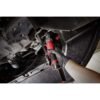
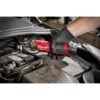
Description
Highlights of the Milwaukee 2557-20 M12 Fuel 3/8″ Ratchet
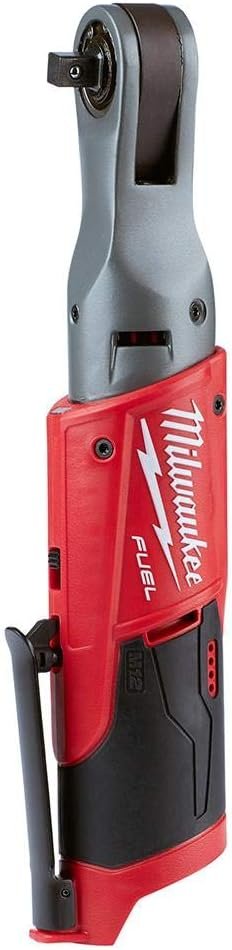
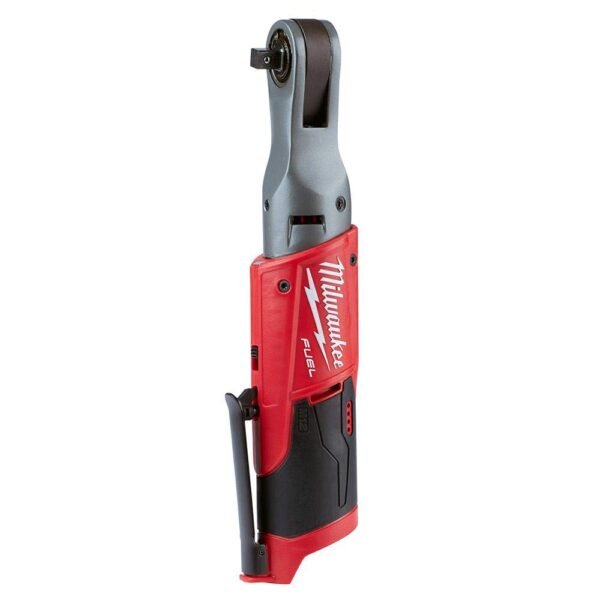
The Milwaukee 2557-20 M12 Fuel 3/8″ Ratchet leads its spec sheet with a torque output of 55 ft-lbs, a figure that sits at the upper end of what cordless ratchets in this drive size claim. The specification that shapes the whole tool, though, is the head: Milwaukee lists it as up to 20% smaller than comparable models, which is the number that matters when the fastener sits behind a bracket. The brushless motor is rated for over twice the motor life of a brushed equivalent, a durability claim rather than a speed claim. Backing that up is premium metal construction with an overmold, so the housing is not carrying the load alone.
- Class-leading published torque at 55 ft-lbs
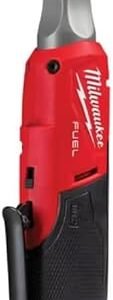
- Compact head size allows access to tight spaces
- Brushless motor rated for over 2x longer motor life
- Built with premium metal components for durability
Drawbacks: Known Limitations
The same spec sheet names the trade-offs. At 2.43 pounds it is not a light tool, and weight is the figure most likely to matter on overhead or sustained work. It ships as a bare tool, with no battery or charger, so anyone outside the M12 platform is looking at a second purchase before the first bolt turns. And free speed tops out at 200 RPM, which is deliberately geared toward torque rather than run-down speed. If the work is high volume rather than high resistance, that ratio is the wrong way round, and the faster M12 FUEL options such as the higher speed 2567-22 ratchet kit are the better read.
- Heavier than some competitors at 2.43 pounds
- Sold as a bare tool without battery or charger
- Speed capped at 200 RPM, which is slow for high-volume work
Design and Build Quality
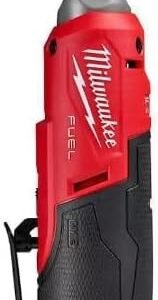
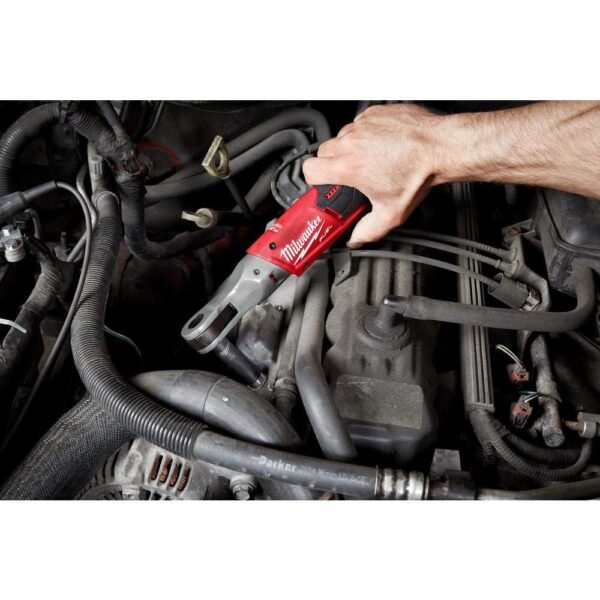
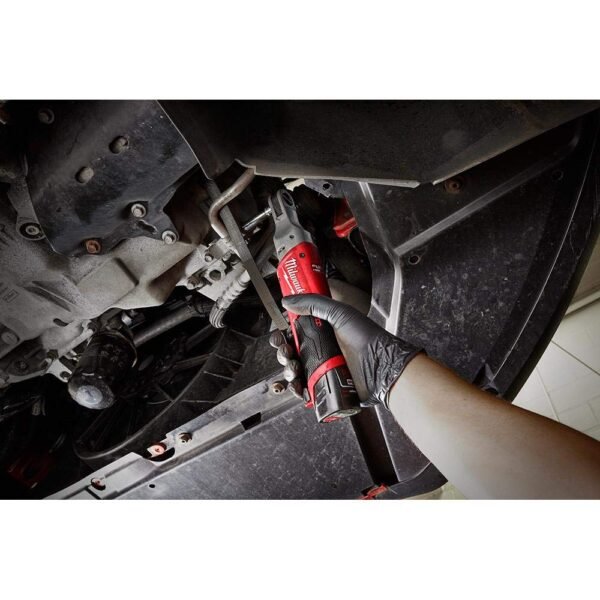
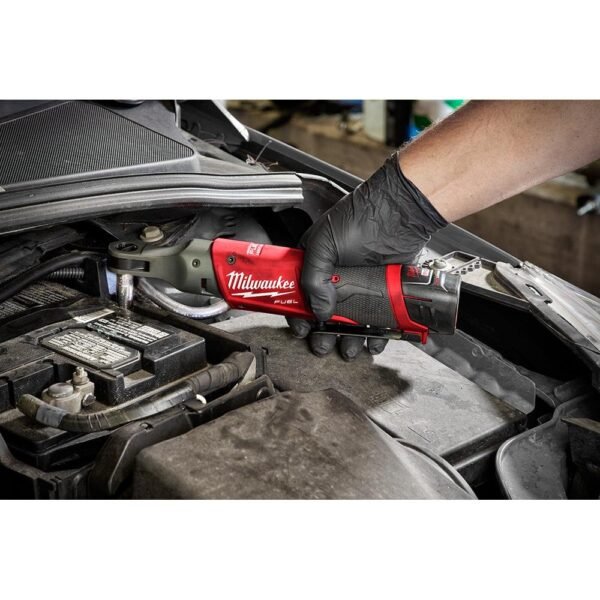
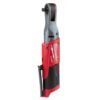
The overmold grip is the ergonomic feature the design leans on, and it is the standard answer to a barrel that gets held for long stretches. The brushed metal finish is a wear surface as much as a look. The compact 3/8″ drive head is the design decision everything else follows from: shrink the head, and the tool reaches into engine bays and boxed assemblies that a full size ratchet cannot enter. The metal components that make the tool feel substantial are the same ones that put it at 2.43 pounds, so the heft and the durability are the same specification read two ways.
Performance the Specification Points To
Fifty five foot pounds of published torque and 200 RPM of free speed describe a tool built to break fasteners loose and seat them, not to spin long threads quickly. The brushless motor supports that reading, since brushless designs hold output more consistently as the battery drains. Buyer feedback on this class of tool repeatedly returns to the same two points that the specs predict: the small head earns its keep in cramped work, and the mass is felt after a while. M12 battery compatibility is the quiet advantage for anyone already carrying that platform, and the plain cost of entry for anyone who is not.
Versatility and Settings
Controls are deliberately minimal: a forward and reverse collar and a variable trigger, with no mode selector to learn. The tool is set up for the metric fastener work that dominates automotive and mechanical service. The battery powered design is the practical difference against pneumatic ratchets, which need a hose and a compressor within reach, and that freedom is the reason this format took over mobile service work. For a look at how the same platform handles a different job, the subcompact M12 2457-20 ratchet takes the size argument further still.
Price Performance and Value Proposition
Priced above budget cordless ratchets, this model asks buyers to pay for torque, head size, and motor life rather than for a bundle. The bare tool status is the number that moves the real cost, since batteries and a charger are not optional if you are starting fresh. For anyone already holding M12 packs, the calculation is simple and the tool slots straight into the kit. Buyers weighing a smaller battery platform against this one will find the trade-offs laid out in our DEWALT 12V MAX cordless ratchet review, and the wider field is covered across our cordless ratchet wrench reviews.
Alternative Offerings in the Market
Within the cordless ratchet field, the trade space is consistent: torque, head size, speed, and weight, with no model winning all four. The Makita XRW01Z cordless ratchet, named alongside this tool in most shopping comparisons, is the lighter option and the one to look at if fatigue is the limiting factor rather than stubborn fasteners. Faster ratchets exist, and they usually carry a larger head to house the gearing, which is exactly the access penalty this Milwaukee is engineered to avoid. For users who rank compact size and torque first, the 2557-20 is the aggressive pick. For users who rank speed or weight first, it is not.
Usability and Handling
The variable trigger is the control that makes a powered ratchet usable rather than blunt, since it lets the fastener be seated by hand feel instead of at full output. The compact head is the feature owners cite most in engine compartments and boxed mechanical assemblies, which matches what the 20% figure promises. The overmold handle is specified to stay grippable with oil or sweat on the hands. The weight remains the honest cost of the metal construction. And the missing battery remains the entry barrier for new buyers, which is worth checking against the 2457-21 kit, which ships with batteries and a charger, before committing to a bare tool.
This cordless ratchet is specified around torque and access, with a compact head, a durable metal body, and a brushless motor rated to outlast brushed designs. The costs are stated just as plainly: 2.43 pounds in the hand, 200 RPM at the top end, and no battery in the box. Where fasteners are tight and space is not available, that balance reads well. Where the work is fast and repetitive, a higher speed model is the better match.