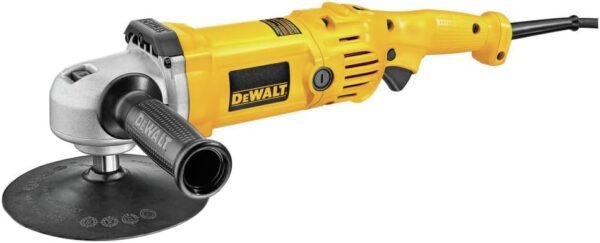
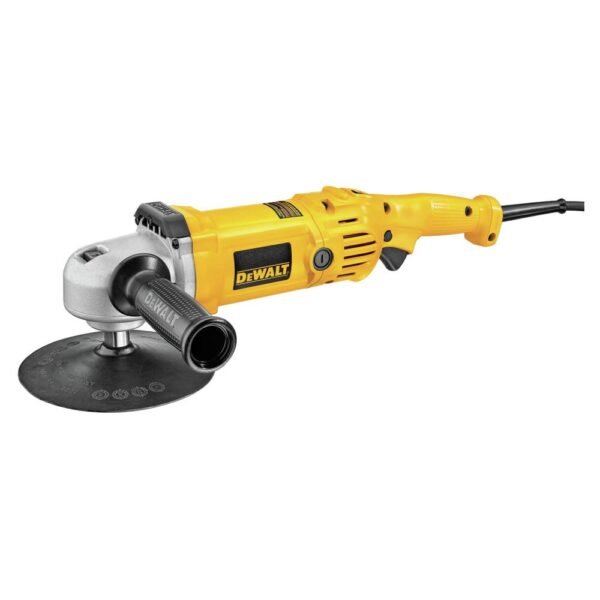
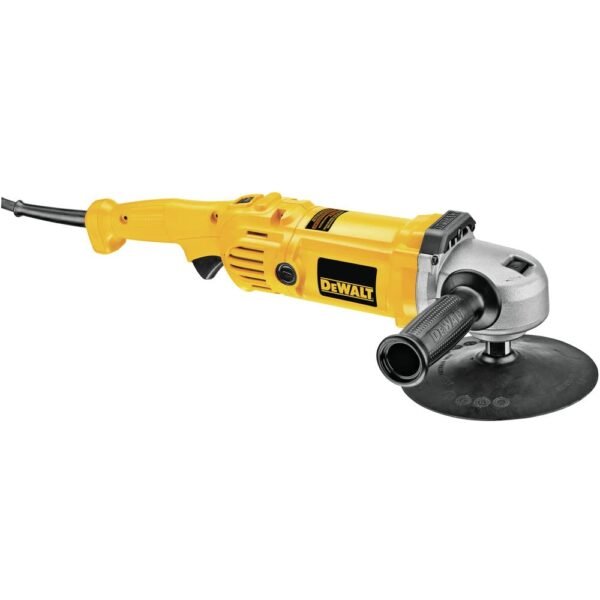
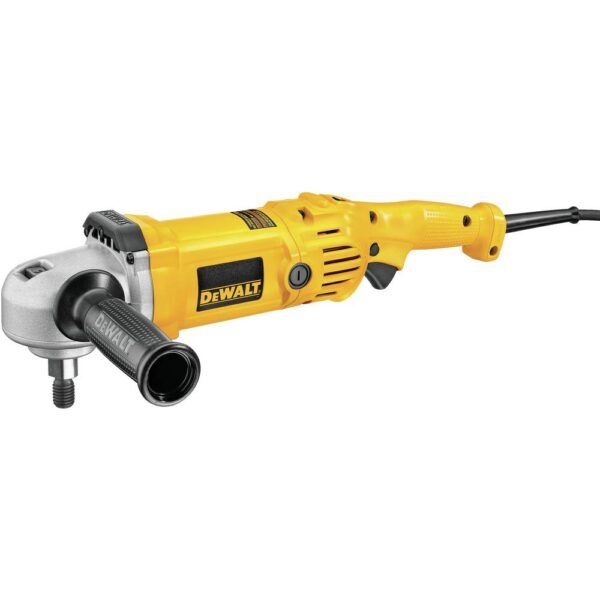
Description
Durable Design with User Comfort in Mind
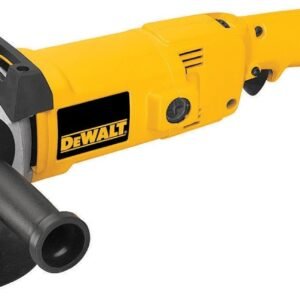
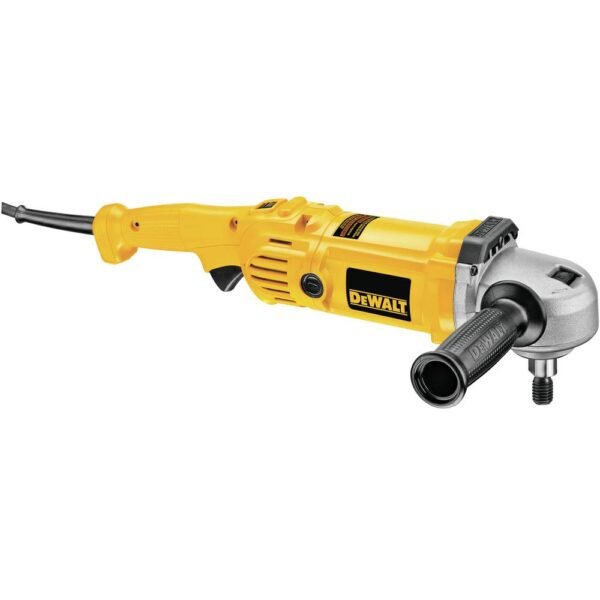
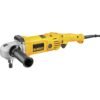
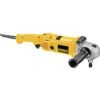
The DEWALT Variable Speed Polisher, 7-Inch to 9-Inch (DWP849) leads on solid construction and a considered control layout. Listing data is inconsistent on weight: the spec block gives just over 2 pounds, which is difficult to reconcile with a 12 Amp motor and a body listed at over 21 inches long. Confirm the figure against the manual before treating this as a light tool. What is not in dispute is the handle arrangement, since the Bale and Straight Side Handle both ship in the box and give two hand positions for control on large panels. The brushed finish suits the professional positioning, and the hook & loop backing pad system is what makes pad swaps quick between cutting and finishing stages.
Variable Speed Control: Precision Meets Power
The variable speed trigger runs from zero to a maximum running speed of around 3,500 RPM, and that spread is the specification that lets one tool move between compounds and surface types. Electronic speed control governs the ramp rather than the top end, which is what allows the pad to be brought up to speed on the panel instead of landing at full speed. On delicate paint that ramp is the difference between correction and damage, and on rougher surfaces it simply saves time. The 12 Amp motor supplies the torque that keeps lower speed settings usable, since a weaker motor stalls where this one holds.
Performance That Stands Up to Professional Use
The specification is aimed well beyond casual use. This tool is rated for professional-grade polishing and buffing, and the ball bearing construction is the internal detail that supports both smooth running and service life under sustained load. Cutting through oxidation and laying down a final finish on a waxed vehicle sit at opposite ends of the speed range, and the motor rating is what covers both. The solid pattern of rotation is what makes even pressure and consistent coverage achievable across a panel. That combination is why the tool appears in professional detailing kits rather than only in home garages, and comparable machines are collected in our polishers and buffers category.
Limitations That Could Impact Some Users
Several aspects deserve weighing before purchase. The corded electric power source caps mobility next to cordless models, which is the trade for uninterrupted power. Buyer feedback repeatedly flags cord length, so workspace planning or an extension lead is part of the setup. Whatever the true weight, the body length of over 21 inches makes this awkward in tight or enclosed spaces. There is no built-in dust collection or splash guard either, so cleanup is on the operator, particularly when polishing outdoors or in uncontrolled conditions. Buyers who want the same DEWALT platform without the cord should look at the DEWALT DCM849B 20V MAX XR cordless polisher.
Perks That Enhance the User Experience
- Smooth variable speed trigger for precise control
- Lightweight design that reduces fatigue during long use
- Robust 12 Amp motor provides power for professional results
- Easy pad changes thanks to the hook & loop backing pad system
These specifications work together rather than separately. Fine speed control is what matches the tool’s output to the task instead of forcing the operator to compensate. Pad changes on a hook and loop system keep the workflow moving, which matters when several vehicles or large surfaces are queued up in one session.
Drawbacks That May Affect Usability
- Corded design reduces portability and freedom of movement
- Lengthy tool body can be cumbersome in tight spots
- No integrated dust or splash protection leading to more cleanup
- Relatively loud operation that might need hearing protection in enclosed areas
The corded design means routing cables and locating outlets is part of every job, which interrupts workflow in a way cordless tools avoid. It is not the right choice for anyone who needs untethered operation or works mainly in cramped spaces. The absence of dust containment means outdoor polishing gets messy, and indoor work calls for ventilation and protection against polishing residue.
Product Competitors: How It Stacks Up
Against the Makita 9237CX3 7-inch polisher kit and the Porter-Cable 7424XP, the differences are straightforward. The Makita offers comparable variable speed control on a lower amp rating, which leaves the DEWALT 12 Amp motor with the advantage on demanding correction work. The Porter-Cable is lighter and more compact, which suits beginners and tight spaces, but it is not built for the same sustained duty. The DEWALT’s electronic speed control and ball bearing construction are the specifications that typically translate into longer service life and smoother running.
The counterpoint is that Makita and Porter-Cable models sometimes add ergonomic refinements or dust collection attachments that the DEWALT does not include. Buyers who rank portability and dust management above raw power will be better served there. Within DEWALT’s own range, the DWP849X variable speed polisher carries the same motor with a fuller accessory bundle. Where power, speed control, and build quality lead the list, this polisher stays ahead.
Value Proposition: What You Get for Your Investment
As a variable speed polisher, the blend of features, motor rating, and construction makes the price defensible. It is not the cheapest option, though the quality for price ratio holds up on the strength of the motor and the bearing construction. The tool is specified for outside and professional uses, which is a different design brief from occasional home detailing. With the included components, the handles and the backing pad, it is ready to work from the box without additional purchases.
On a tight budget this will feel like a stretch, though the performance justifies it for anyone polishing vehicles, boats, or similar surfaces regularly. The robust build reduces the likelihood of replacement or repair, which is the real basis of its long-term value. For casual users it is more tool than the job needs, and the DEWALT DW849 right-angle polisher is worth comparing before committing.
This review weighs the powerful features of the DEWALT Variable Speed Polisher against its practical limitations as published. Its strengths in motor power, speed control, and build quality make it a standout in its category, while the corded design and absent dust control are the factors that decide whether it suits a given workspace. On specification, it is a tool engineered for serious, repeated use.