Description
Lightweight Design and Ergonomics for Tough Jobs
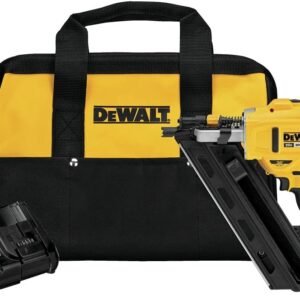
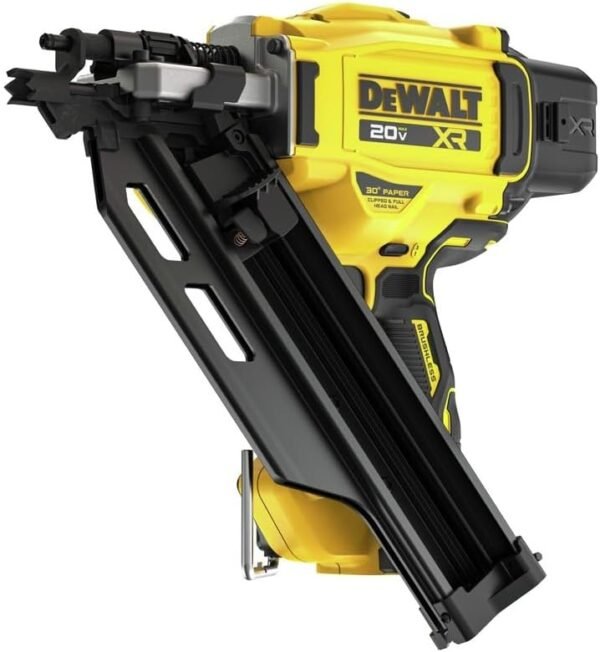
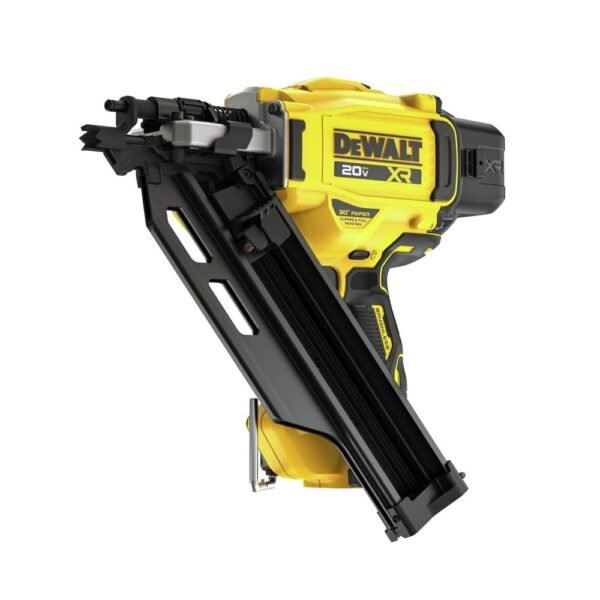
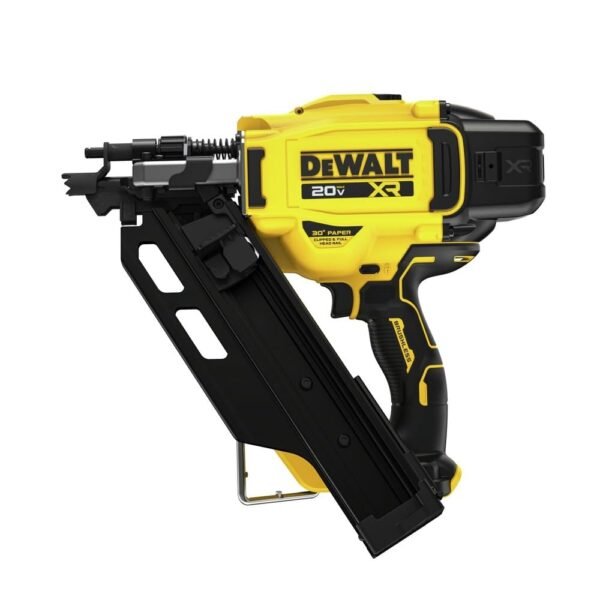
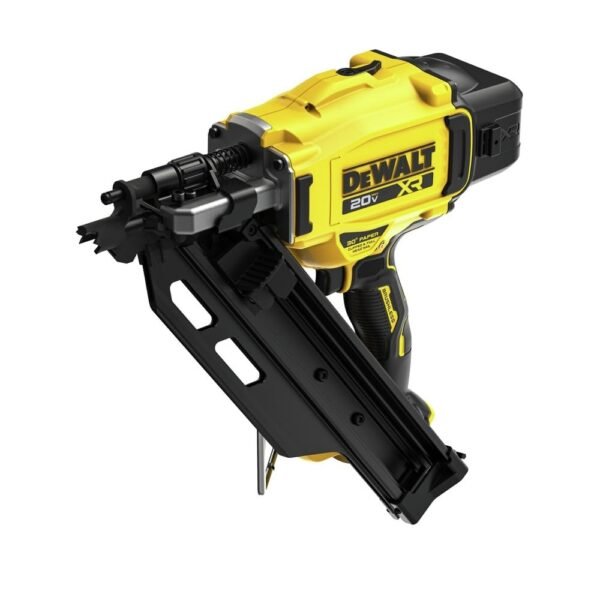
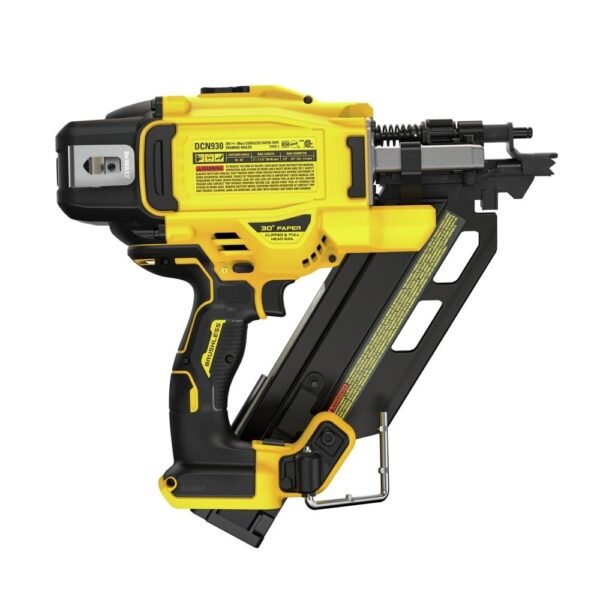
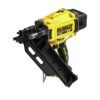
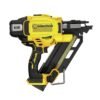
The DeWalt DCN930B 20V MAX Brushless Lithium-Ion 30-Degree Cordless Paper Tape Framing Nailer is listed at 8.65 pounds (tool only), which puts it below the working weight of many pneumatic framing nailers once a hose is counted in. The compact dimensions (13.9 x 5.6 x 13.2 inches) are the specification that matters most for maneuvering in tight corners and at awkward framing angles. The brushed finish and solid rectangular body are built around a full-hand grip, which is the design intent for “toe-nailing” work where the tool has to be held at an angle and still driven squarely.
Balance is the practical argument for a cordless framing nailer in this weight class, particularly overhead where a hose adds drag. The cordless format removes hoses and compressors from the setup, which matters on job sites where mobility is the constraint. That said, the bare tool listing means the 20V battery and charger are sold separately, so anyone starting fresh on the platform is buying more than the box in front of them. Readers comparing platforms can work through the rest of our framing nailer coverage first.
Innovative Nose Design Enhances Toe-Nailing Accuracy
The headline feature in DeWalt’s own description is the redesigned nose built specifically for toe-nailing applications. On this 30-degree angled paper tape framing nailer, the nose geometry is intended to help the user align, grip, and drive nails at aggressive angles without the tool skating off the mark. DeWalt makes that case for framing corners and securing studs, where a nose designed for flush firing tends to struggle.
Taken as a manufacturer claim rather than a measured result, the argument is straightforward: a nose that bites at an angle addresses the two failure modes that cost time on a frame, nails driven proud and nails that wander and split the stock. DeWalt also credits the nose design with fewer feed interruptions. For a comparison point inside the same battery platform, the lighter DEWALT DCN920B framing nailer covers similar ground with a different weight target.
Active Flywheel Technology Minimizes Downtime
The other DeWalt-specific feature is Active Flywheel Technology, which the manufacturer describes as eliminating ramp-up time between shots in rapid sequential mode. In practical terms the flywheel is kept spinning rather than spun up for every shot, and the stated benefit is less downtime across a run of continuous nailing.
That specification is worth weighing against pneumatic tools, which have no ramp-up because the air is already there. Ramp-up is the classic weak point of cordless framing nailers, so a design that targets it directly answers the right complaint. The tool also supports sequential and bump firing modes, selectable on the tool itself, which is what lets one nailer serve careful layout work and fast sheathing.
Benefits of Cordless Convenience
Moving from a pneumatic framing nailer to this cordless framing nailer removes compressor setup, hose runs, and end-of-day teardown from the routine. For anyone already holding 20V batteries from other DeWalt tools, the nailer drops into an existing battery ecosystem, which is where the cost argument for a bare tool comes from.
The cordless format also removes a trip hazard on scaffolding and ladders, since no hose crosses the work platform. Runtime is battery dependent, and heavy production days need spare packs, a normal cost of the format rather than a fault of this model. The caveat stays the same: the tool ships without batteries or charger, so entry cost is higher than the tool price for anyone not already on the platform. A pneumatic alternative such as the PORTER-CABLE FC350B framing nailer trades that battery investment for compressor dependence.
Drawbacks to Consider Before Buying
The price point is the first barrier for occasional users, because batteries and a charger are a separate line item. Weight is the second: the listed 8.65 pounds is tool only, and a battery pushes the working weight past 10 pounds, which is the number that matters over a full day even though the bare tool specification looks light.
Paper tape collation carries its own trade-off. Paper strips are more vulnerable to damp and crushing than plastic collation, and a damaged strip is a feed jam waiting to happen. Magazine capacity is adequate for the class, though reloading is a two-hand operation, and anyone coming from pneumatic tools faces a short adjustment period learning the firing modes.
- Batteries and charger sold separately, increasing overall investment
- Tool can feel heavy with battery installed
- Paper tape jams can interrupt workflow
- Reloading the magazine could be faster
Competitors in the Cordless Framing Nailer Market
Against popular competitors like the Bostitch BCFP32K-2 and Metabo HPT NR1890DRS, the DeWalt argues on portability and on features such as Active Flywheel Technology. The Bostitch is competitive on power and comes in slightly lighter with a battery fitted, but it does not offer the same rapid sequential firing mode.
Metabo HPT brings strong stated performance and a good magazine capacity, though its 30-degree nails are paper collated in a different format, which some buyers prefer for jam resistance. On ergonomics, DeWalt’s rectangular body and toe-nailing nose are the differentiators, while rival tools tend to be bulkier at the nose. For structural connector work, which needs a different fastener and a different nose entirely, the BOSTITCH MCN150 metal connector nailer is the tool built for that job.
Where the DeWalt is weakest is the price-to-quality ratio once batteries and a charger are added. Its cordless convenience, angled nose design, and selectable firing modes still make it a serious option for professionals who rank mobility and speed first.
Price Performance and Value Proposition
The value proposition turns almost entirely on what is already in the truck. For an owner with compatible 20V batteries and chargers, the bare-tool price is the whole price, and the nailer slots into a workflow that already runs on those packs. The lack of included power sources is a saving rather than an omission in that scenario.
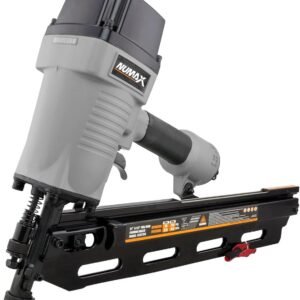
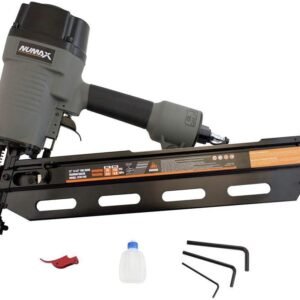
For a buyer new to cordless framing, the entry cost reads steep, since batteries and a charger have to be bought alongside. The listed build and feature set support the price for professionals framing daily. Hobbyists and occasional users will get more tool per dollar from a pneumatic model such as the NuMax SFR2190 pneumatic framing nailer, provided a compressor is already on hand.
Highlights of the DeWalt DCN930B Cordless Framing Nailer
- Lightweight design (8.65 lbs tool only) reduces fatigue during extended use
- 30-degree nose design built specifically for toe-nailing
- Active Flywheel Technology eliminates ramp-up time between shots
- Cordless operation removes compressor and hose setup
- Compatible with existing 20V DeWalt batteries for seamless integration
The DCN930B is specified around a clear priority: put framing power on a battery platform without giving up angled nailing accuracy. It carries the usual cordless trade-offs in weight and entry cost, but the package reads as a coherent option for professionals who need a reliable cordless framing solution.