Description
Highlights of the Nitecore P20iX Flashlight Specification
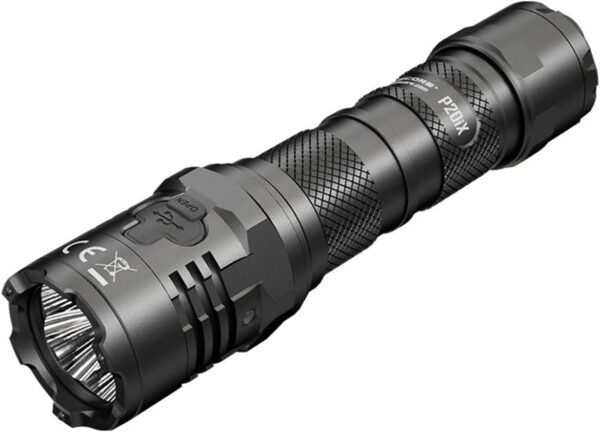
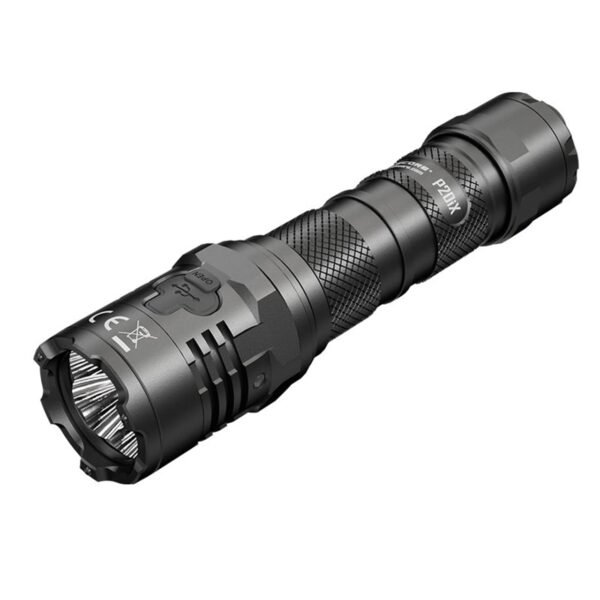
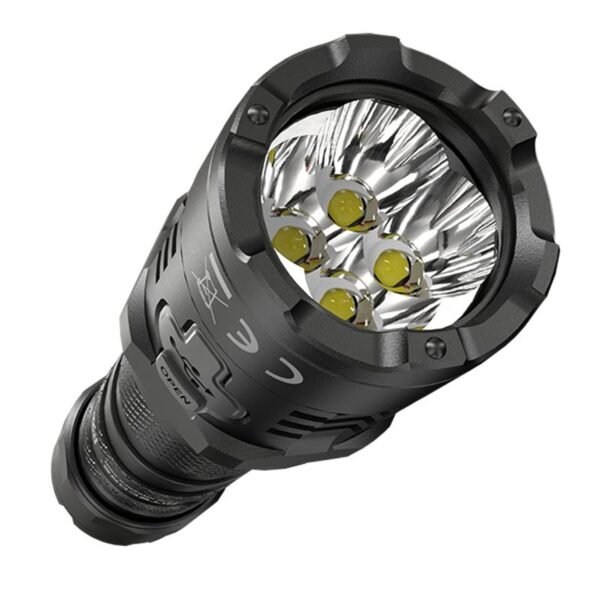
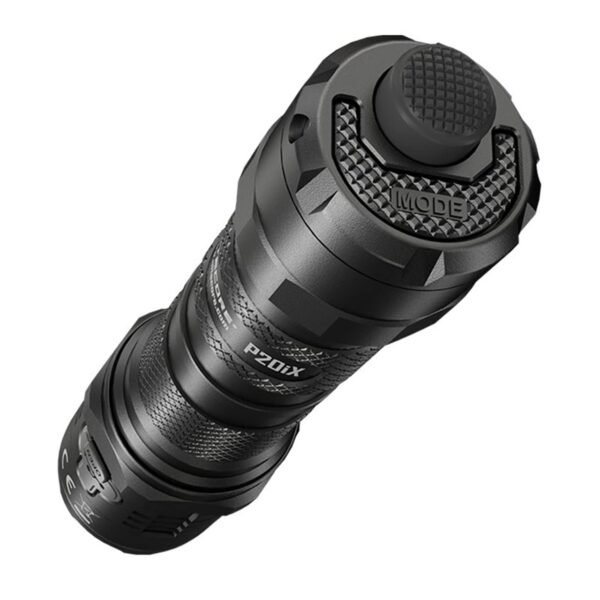
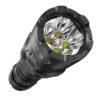
The Nitecore P20iX is specified at a maximum output of 4000 lumens from four Cree XP-L2 V6 LEDs, an unusually high figure for a light in the duty-handheld size class. The published throw distance is 221 meters, which is modest relative to the lumen count and reflects the four-emitter layout: multiple LEDs behind shallow optics produce a broad, flooded beam rather than a tightly collimated one. The constant current circuit is the specification that matters for sustained use, since it holds output steady rather than letting it sag as the cell drains, and Nitecore publishes a runtime of up to 350 hours on the lowest setting. Power comes from a rechargeable NL2150HPi 5000mAh lithium-ion cell with USB-C charging built into the light.
Design and Build Specification
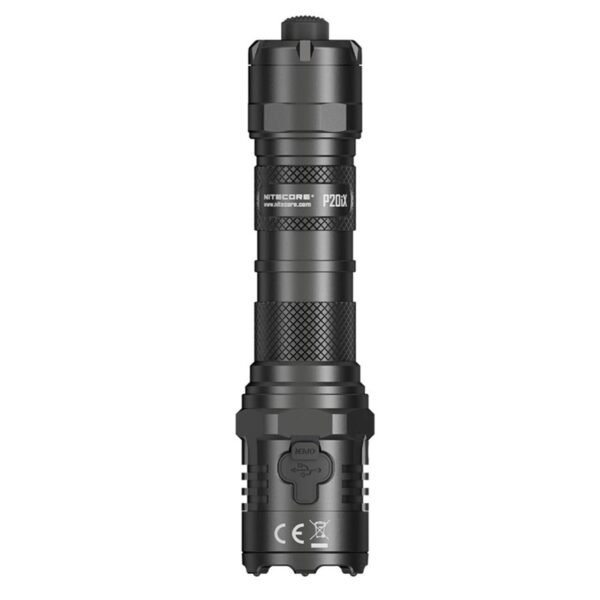
The body is aluminum in a black finish. The imported specification data does not reconcile here and should be checked before ordering: the listing quotes 116 grams (4.1 ounces) alongside dimensions of roughly 6.9 inches long and 2.4 inches wide, but a light of those dimensions carrying a 21700-format 5000mAh cell cannot weigh 116 grams, since a cell of that size alone accounts for close to that figure. The 116 gram number is most likely the bare body without the cell, and the 2.4 inch figure is more consistent with a bezel or packaging measurement than a body diameter. Confirm both against the manufacturer sheet. The included NTH20 tactical holster covers belt carry. The listing describes the light as water resistant without publishing an IP rating, and separately states it is not rated for immersion, so treat it as rain and splash tolerant only.
Battery and Charging
The combination of a high-capacity lithium-ion cell and onboard USB-C charging removes the need for an external charger or proprietary cable, and the light can be topped up from a power bank or laptop. The more interesting inclusion is the CR123 battery magazine, which allows primary cells as a fallback when no power source is available. That dual power path is the practical advantage over rechargeable-only designs, and it is a specification worth weighing against lights that lock the user into a single cell type, such as the Fenix PD36R rechargeable everyday carry light.
Interface and Accessories
The light offers multiple output levels spanning low-level illumination through the full 4000 lumen ceiling. The constant current circuit keeps output stable across the discharge curve, which is the difference between a published lumen figure and a sustained one. A pocket clip and lanyard handle carry, and a spare O-ring is included, a small but telling inclusion since O-rings are the wear item that determines whether the seal survives repeated cell changes.
Downsides Worth Noting
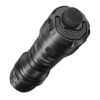
The size is duty-handheld rather than pocketable, and buyers expecting a slim everyday carry light will find it substantial, and are better served by a pocket light such as the JETBeam E26. The tail switch takes firm pressure, which is protective against accidental activation but slower for rapid use. The 4000 lumen setting is too much for close-range tasks, so near-field work means stepping down through the output levels rather than starting low. The absence of an immersion rating limits use around water compared with lights carrying a published IP68 figure.
Drawbacks
- Bulkier than compact models, which affects everyday carry comfort.
- Tail switch stiffness slows rapid activation.
- The maximum setting is excessive for near-field tasks and needs stepping down.
- No published immersion rating, only general water resistance.
Alternatives in the Tactical Flashlight Market
Against the Fenix PD36R and the Olight Warrior X Pro, the P20iX leads clearly on raw output, though the 221 meter throw shows that output is spread into flood rather than concentrated into distance. The Fenix is more compact with a simpler interface, which suits everyday carry better. The Olight uses magnetic charging, which some users prefer to a port, but does not match the P20iX on runtime or the dual power option, and buyers who want a searchlight class beam instead look at the Fenix LR40R. Within the same brand, buyers wanting still more output move to the Nitecore TM12K at a rated 12000 lumens, while those who prefer a rotary-controlled interface look at the Nitecore SRT7i with its smart selector ring.
Value Assessment
The specification is well matched to buyers who need a high-output handheld that can run on either a rechargeable pack or primary cells, which is the combination that justifies the price against single-source competitors. The included holster, spare O-ring and USB-C cable mean no immediate accessory purchases. Against that, the size and the lack of an immersion rating are real limits, and anyone whose priority is pocket carry should shop elsewhere in the tactical flashlight category. For outdoor use, emergency kit duty and vehicle carry where size is not the constraint, the sheet holds up well.