Description
Highlights of the SABRE Stun Gun with Flashlight and Battery Strength Indicator
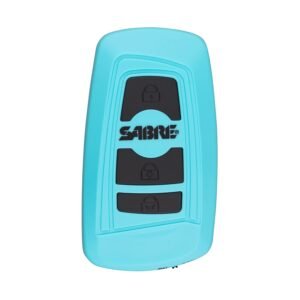
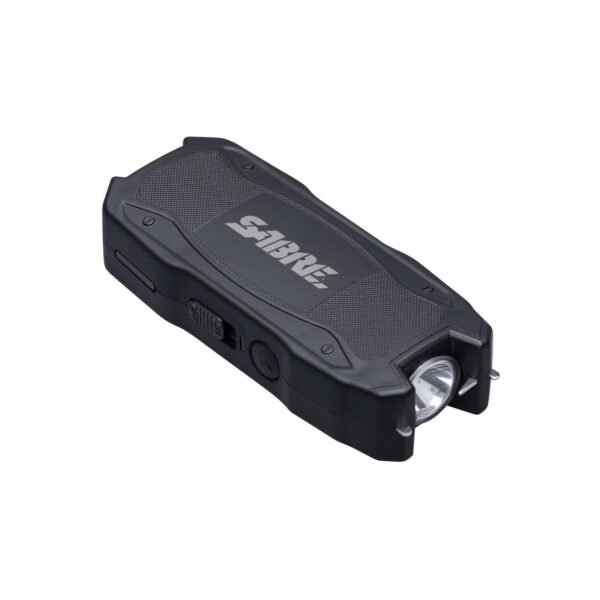
The SABRE S-1021 Stun Gun combines three functions in one compact housing: the stun unit itself, a flashlight and a charge gauge. SABRE publishes the output as a 1.552 microcoulomb (µC) charge, and it is worth understanding what that figure is and is not. Charge in microcoulombs is the measurement personal-defense manufacturers cite when they want a comparable number, in contrast to the multi-million-volt claims common elsewhere in the category, which are not measured the same way and are not comparable between brands. SABRE references Department of Justice guidance for the figure. The 120 lumen LED flashlight is a genuine secondary use rather than a token addition, and the battery strength indicator reports remaining charge, which addresses the most common failure mode for a rechargeable defensive device sitting unused in a bag. A safety switch guards against discharge while carried.
- 1.552 µC published charge output
- 120 lumen LED flashlight built into the same housing
- Battery strength indicator showing remaining charge
- Safety switch to prevent unintended activation
Drawbacks of the Device
The plastic construction keeps weight to 2.56 ounces but does not match the impact tolerance of metal-bodied units, which matters for a device carried loose in a bag with heavier gear. The compact footprint of 3.7 inches long by 1.7 inches wide cuts both ways: it carries easily in a purse or on a belt, but users with larger hands report the grip is cramped. The supplied charging cable is basic and the recharge cycle is not fast. The 90 day warranty is short for the segment, where longer coverage is common. Buyers who want a metal body and a longer warranty generally look at the TASER X1 and its duty-oriented specification, at a substantially higher price.
- Plastic body is less impact tolerant than metal alternatives
- Small grip is awkward for larger hands
- Basic cable and a slow recharge cycle
- 90 day warranty is short for the category
Design and Ergonomics
The rubberized grip covers the section of the housing the hand actually contacts, and the safety switch sits where a thumb falls, which is the layout most reviewers in this class prefer. The black finish and small profile keep it discreet in a bag or on a belt using the supplied holster. The tradeoff is fixed by the dimensions: a unit small enough to carry unnoticed is a unit that offers little to hold onto. Anyone choosing between concealability and a full-hand grip should handle both before committing.
Published Performance and Operation
Activation requires disengaging the safety first, a deliberate two-step sequence that reduces accidental discharge at the cost of a moment’s delay. That is a design decision rather than a defect, and it is the reason manufacturers of carried defensive devices recommend familiarisation with the control layout before relying on one. The flashlight’s 120 lumen output is adequate for walking and short-range use but sits well below dedicated handhelds; anyone wanting a genuinely capable light alongside a defensive tool would carry a separate unit such as the JETBeam E26 pocket flashlight. Stun device possession and carry are regulated differently by state and by city, and some jurisdictions restrict or prohibit them outright, so confirm local law before purchase.
Price Position in the Personal Defense Market
For the money, the specification combination is unusual: charge output, a usable flashlight and a charge gauge are not often found together at this price. What the price does not buy is a metal housing, a long warranty or replaceable cells. The included holster and cable mean there are no required extras at checkout. Buyers whose priority is a single compact item that covers lighting and deterrence will find the package coherent; buyers who want ruggedness above all will be paying more elsewhere.
Alternative Offerings in the Self-Defense Category
Competing units take different approaches. Models such as the Vipertek VTS-989 advertise multi-million-volt figures but omit a flashlight and a charge indicator, and those voltage numbers are not directly comparable with a microcoulomb rating. The Taser Pulse+ adds wireless features and a different deployment method at a much higher price and larger size. Within the stun gun category this SABRE sits in the middle: more measured on published output than the voltage-claim products, less rugged and less featured than the premium tier. A related SABRE option in the same family is the compact three-in-one SABRE unit with an alarm, which swaps some size for a personal alarm function.
Practical Considerations for Buyers
The size and weight are the strongest practical arguments: a device that is inconvenient to carry tends not to be carried. The flashlight extends the unit’s usefulness beyond its primary purpose, including during power outages. The charge indicator addresses the readiness problem directly, since a rechargeable device with no state-of-charge readout gives no warning before it is flat. Against that, the plastic housing argues for keeping it in the supplied holster rather than loose among heavy contents. Those wanting a non-electrical option in the same size class often compare the SABRE pepper spray and door alarm kit.
Specification Summary
- 1.552 µC published charge, referenced to Department of Justice guidance
- 120 lumen LED light integrated into the housing
- Battery strength indicator for state of charge
- 2.56 ounces, 3.7 by 1.7 inches
- Safety switch and rubberized grip
- Holster and charging cable included
- 90 day warranty
The specification describes a compact carry device that pairs a measured charge output with a working flashlight and a charge gauge. It is a reasonable fit for buyers who value size and simplicity, provided local law permits possession and the plastic housing is protected in carry.