Description
Performance and Power Delivery
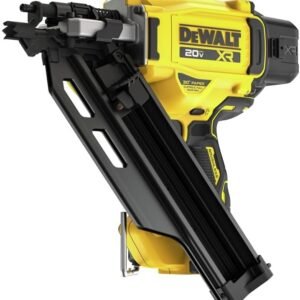
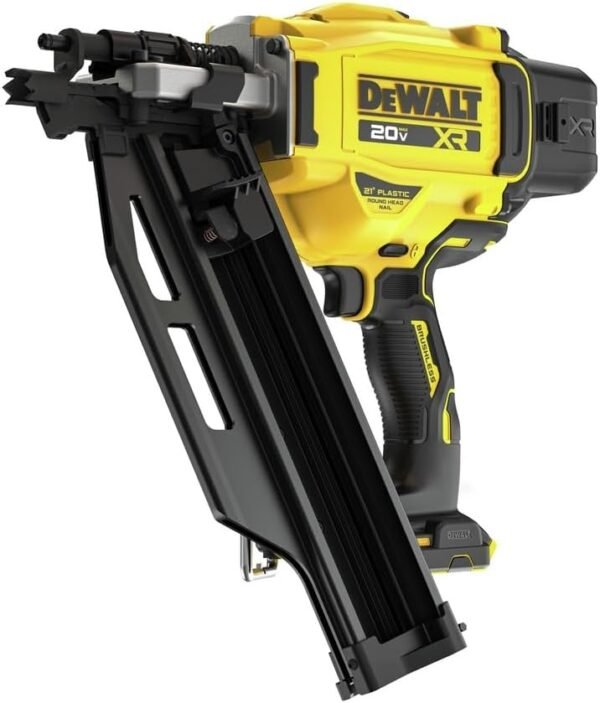
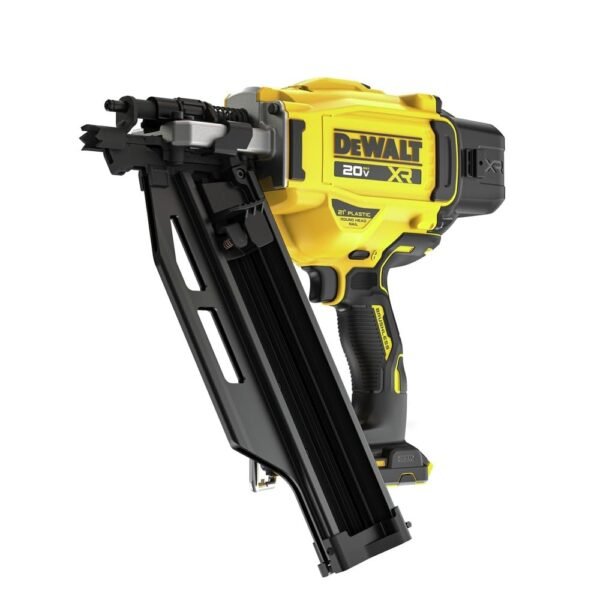
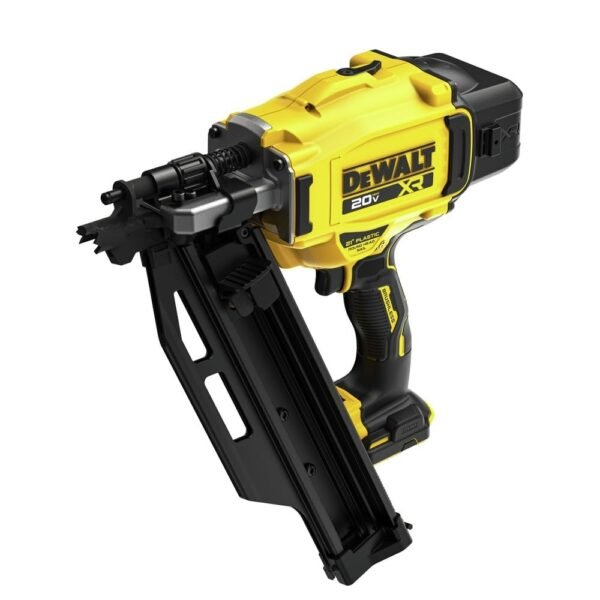
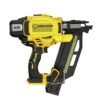
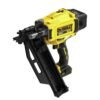
The Dewalt 20V Max Brushless 21 Degree Plastic Framing Nailer (Bare Tool) is built around cordless operation. With no hose or compressor in the chain, setup and pack-down are shorter than an equivalent pneumatic rig, which is the central argument for the platform on a busy job site. The brushless motor is specified to drive nails into framing lumber without an air supply. Because the package ships as a bare tool, buyers need compatible 20V Max batteries already on hand. That keeps the shipped tool light but adds a purchase for anyone not already in the Dewalt battery ecosystem, and it is the single biggest factor in what the nailer actually costs to put to work.
Design and Handling
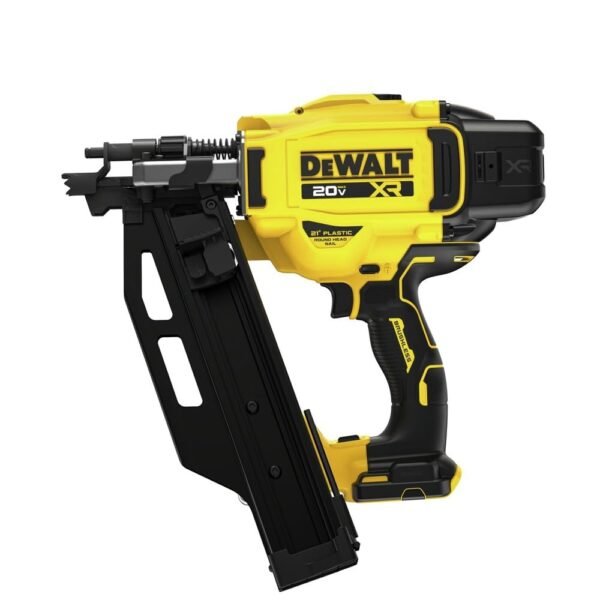
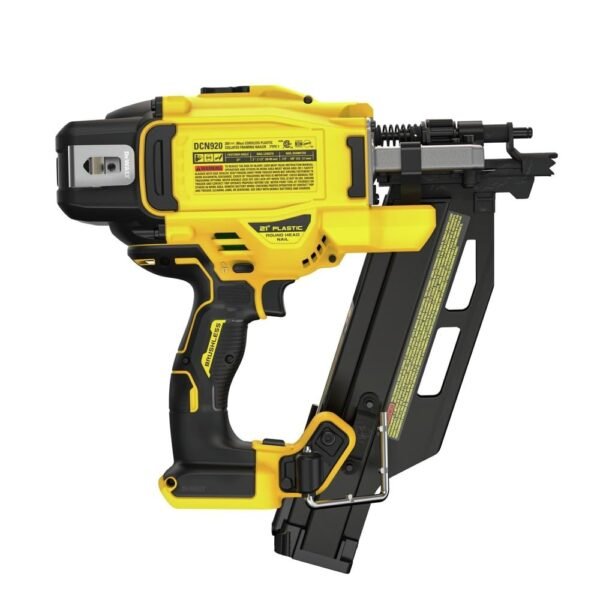
Listing data is inconsistent on weight: one figure gives about 8.65 pounds for the tool while another states 10.03 pounds including minor components, so the lighter number reads as the bare-tool spec and the heavier one as a shipped or as-configured figure. Either way it lands below bulkier pneumatic framing guns of similar capacity, and the lightweight design is the stated advantage for overhead work and ladder work. The redesigned nose is the feature Dewalt promotes for “toe-nailing,” where fasteners are driven at aggressive angles, and the compact body is described as an aid in tight quarters around joists and studs. Shoppers weighing form factor against reach can set it beside the DEWALT DCN930B cordless framing nailer, which runs on the same battery platform.
Positive Features
The specification sheet and feature list point to a few clear strengths:
- Active Flywheel Technology is claimed to eliminate ramp-up time between shots, keeping the tool ready to fire in rapid sequential mode.
- The cordless format means no hoses or compressors, which removes trip hazards and keeps the workspace cleaner.
- The plastic framing magazine is light and balances against the motor housing.
- Support for 21-degree plastic collated framing nails covers a widely stocked fastener type.
Together those points make the tool a reasonable upgrade path for a crew moving off pneumatics, and they are the same criteria worth applying across the framing nailers we cover.
Drawbacks and Considerations
Several downsides follow from the same design decisions:
- As a bare tool, it requires compatible batteries and a charger, which adds to the real purchase price.
- The plastic magazine is lighter than metal but generally less rugged, a fair concern on sites where tools take abuse.
- The motor housing and magazine sit forward of the grip, so weight distribution is worth checking before committing to long overhead runs.
- No depth adjustment dial is listed, so fine-tuning nail depth falls to technique rather than to a setting.
None of these are automatic disqualifiers, but they shape how well the tool fits specific job demands.
Comparison with Other Options
Against other cordless framing nailers such as the Milwaukee M18 Fuel and the Makita XNB01Z, this Dewalt’s differentiator on paper is rapid sequential firing by way of Active Flywheel Technology, which the manufacturer credits with cutting downtime between shots. The Milwaukee is generally specified with broader battery compatibility and a more robust magazine while carrying more weight. The Makita is usually described as better balanced but gives up some driving power on heavy framing.
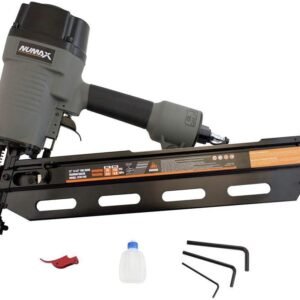
The toe-nailing nose is the more refined part of this design relative to several rivals. Working against it is the bare-tool packaging, which puts it behind kits that arrive ready to run. Buyers already committed to the Dewalt 20V Max system get the most out of it, while anyone starting from zero may prefer a bundle, or an air tool such as the pneumatic NuMax SFR2190 if a compressor is already in the shop.
Value Proposition
On price to quality ratio, this framing nailer makes its strongest case for someone who already owns Dewalt batteries. Cordless operation plus brushless motor efficiency is the argument for professionals and serious DIYers. The up-front number looks steeper once batteries are added, but shorter setup and the lighter maintenance load compared with pneumatic tools work in its favor across the life of the tool.
For tighter budgets or a first cordless purchase, competing bundles can look better on day one. A lighter pneumatic option such as the PORTER-CABLE FC350B is the usual alternative when nailing capacity per dollar matters more than cordless freedom.
Features Breakdown and User Experience
Past the headline specs, the listing notes a brushed finish intended to help grip and wear resistance. Leaving the battery out of the box also keeps the shipped tool lighter than most kitted cordless nailers, which is part of why it packs down small in a tool bag.
Support for 21-degree plastic collated nails matters because that collation is easy to source. The rectangular body shape and solid housing are what allow work at awkward angles, and the active flywheel mechanism is credited with driving nails consistently rather than misfiring.
One oddity in the imported data is worth flagging: the power-source field describes the tool as hand-powered, which contradicts the 20V Max battery platform stated everywhere else in the same listing. No trigger-pull figure is published either, so ergonomic claims rest on the compact housing and grip finish rather than on numbers.
Limitations Worth Mentioning
Several aspects could stand improvement:
- The missing battery and charger is a genuine barrier for casual buyers.
- The plastic framing magazine is the component most likely to show wear in rough environments.
- No depth control feature is listed, so consistent nail depth depends on operator technique.
- Being battery only, there is no pneumatic fallback when charge runs out mid-run. Crews that also shoot roofing can look at the DEWALT DCN45RND1 roofing nailer on the same 20V Max batteries.
These limitations do not overshadow the positives, but they matter to anyone expecting a fully loaded package or metal construction.
This Dewalt framing nailer rests its case on a brushless motor, cordless freedom, and a nose designed for toe-nailing. It asks for a commitment to the Dewalt battery ecosystem and carries a few design gaps, the absent depth dial chief among them, but it stands out where speed, portability, and solid framing power are the priorities.